The short version
AI tools are collapsing the distance between PM, design, and engineering. The AI Product Engineer is the archetype emerging: one person who thinks strategically about what to build, creates and iterates on the experience, and ships it, with AI amplifying each step. PMs are well-positioned because they already have the hardest skill (customer empathy and strategic thinking). AI gives them the "how." Things that used to require three people and four weeks now require one person and four days. PMs who treat AI as "something my team uses" instead of getting hands-on with Cursor, Claude, and Copilot are going to fall behind fast. Pick one feature idea this week, skip the spec, build the prototype yourself.
The PM role has always been a weird one. You're called the "CEO of the product" but you don't manage anyone. You're the bridge between engineering, design, and business, but every group thinks you're slightly in their way. Engineers think you lack technical depth. Designers think you kill their ideas. Stakeholders think you're too slow.
I've felt all of that tension across 20 years. And I think AI is about to resolve a lot of it, in a way that changes the shape of the PM role permanently.
The old model and its friction points
Traditional product development runs on handoffs. PM writes the spec, hands it to design. Design creates mockups, hands it to engineering. Engineering asks a bunch of clarifying questions, builds something slightly different from what anyone imagined, and everyone regroups.
Each handoff loses information. Each transition adds time. And nobody owns the whole thing end to end.
I saw this play out at Microsoft, at Salesforce, at every big company. The process worked, sort of, because each person brought deep specialized skill. But the coordination cost was enormous. Half the meetings existed just to keep everyone aligned on decisions that kept shifting.
What AI changes
AI tools are collapsing the distance between disciplines.
A PM can now build a working prototype without writing a line of code, using AI coding assistants. I do this regularly. Describe what I want, iterate with the AI, and have something clickable in a couple hours.
A designer can generate functional UI without waiting for an engineer to stub it out. Tools like Figma with AI, or direct code generation, let designers go from concept to working artifact in a single session.
An engineer can test multiple UI approaches without waiting for design to deliver options. Generate variations, test them, move on.
The result: each person on a team can do more of the full stack than before. The boundaries between roles are blurring.
The AI Product Engineer
I'm seeing a new archetype emerge. Someone who can think strategically about what to build (the PM skill), create and iterate on the experience (the design skill), and build and ship it (the engineering skill), with AI amplifying each one.
This isn't a new title. It's a description of how the best product people already work, using AI to move fast across the whole lifecycle.
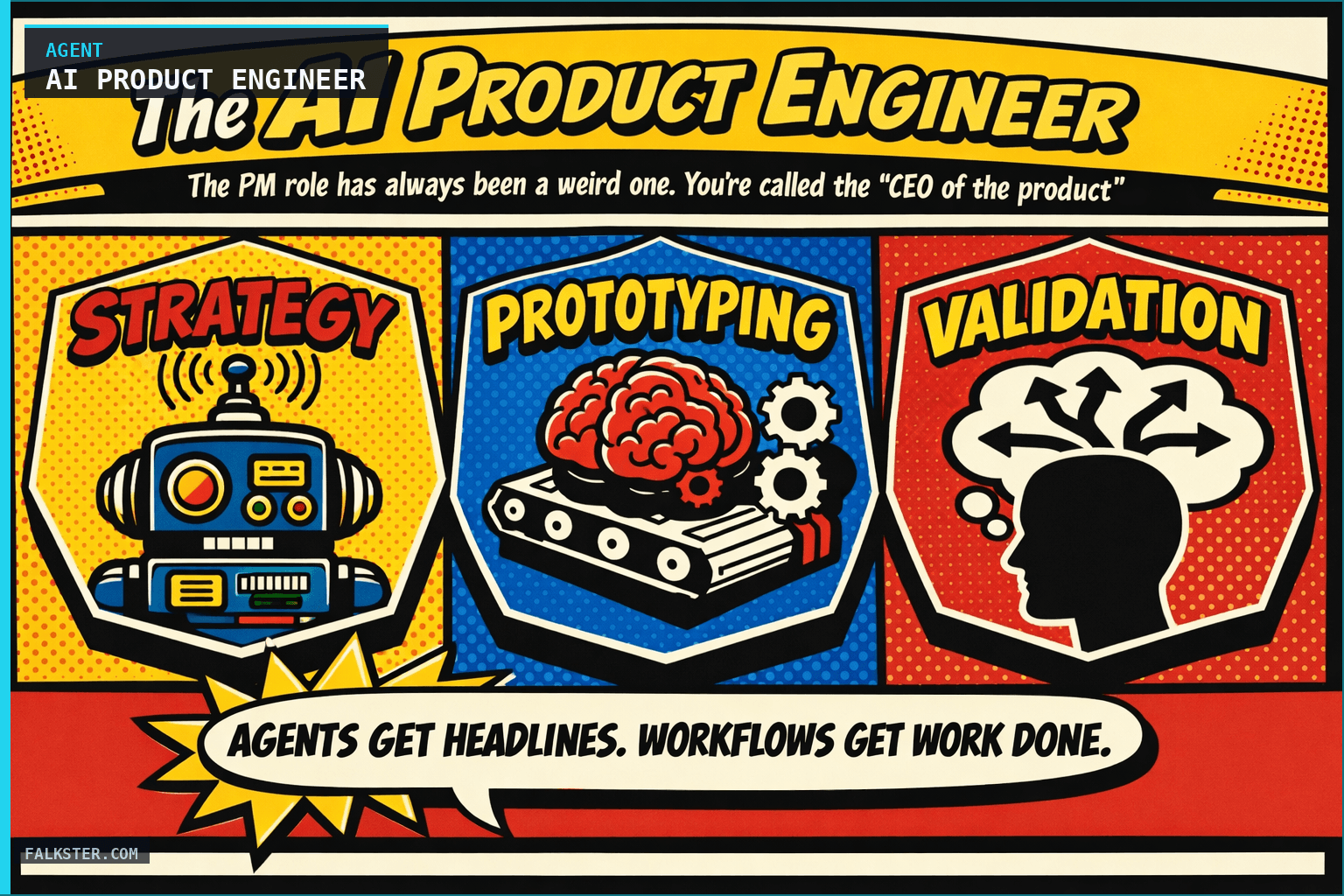
On strategy, AI chews through market data, customer feedback, and the competitive landscape, and you get to a hypothesis faster. On prototyping, you build instead of spec: idea to working prototype in hours, not weeks (see Instant Prototyping for the exact workflow). On validation, you put the prototype in front of customers and let AI transcribe the call, pull the patterns, and surface the themes, so the synthesis that used to eat a week happens in minutes. And on shipping, low-code platforms and AI-assisted development mean one person can ship what used to need a full squad.
When I was at Quip (before it merged into Slack), we restructured the engineering team around ownership. Smaller groups, sometimes just one engineer, owning their area end to end. That led to faster decisions and more cohesive products. AI takes that same idea further: one person, augmented by AI, can own an entire product surface. I first worked through this in The Rise of the AI Product Engineer, written before the archetype had a name anyone recognized.
This doesn't mean everyone becomes a solo act
The solo AI Product Engineer works great for certain contexts: internal tools, early-stage products, rapid prototyping, and quick experiments. It's not a replacement for deep specialization when you're building at scale.
Complex systems still need dedicated engineers. Nuanced user experiences still need dedicated designers. Strategic direction still needs someone who deeply understands the customer and the market.
But the threshold for when you need a full cross-functional team has moved. Things that used to require three people and four weeks now require one person and four days. That changes how you staff, how you plan, and how you think about product development.
Why PMs are well positioned for this
If you're a PM reading this, you already have the hardest skill: customer empathy and strategic thinking. You understand what to build and why. AI gives you the how.
Engineers often go deep on implementation but can miss the customer context. Designers often nail the experience but struggle with technical feasibility. PMs sit at the intersection. Add AI tools that handle the execution details, and a PM becomes capable of things that used to require a small team.
That said, you need to actually learn the tools. Not just "be aware of AI." Actually use Cursor, Claude, Copilot, whatever. The AI Agent Fleet is a good next step once you're comfortable building. Build things. Break things. Get comfortable generating code, creating prototypes, running analyses. The PMs who treat AI as something their team uses but they don't are going to fall behind fast.
What to try this week
Build something. Take a feature idea you've been thinking about. Don't write a spec. If you want the full operating model behind this shift, start with The Product Operating Model. Open an AI coding tool and describe what you want. Iterate until you have something working. Show it to a customer.
See how it feels to go from idea to artifact in hours instead of weeks. That's the shift.
Sources: Cursor, Claude, GitHub Copilot, Figma.
Also on Medium
Full archive →AI Agents and the Future of Work: A Pixar-Inspired Journey
What product managers can learn about AI agents from how Pixar runs a film team.
Many AI Agents Are Actually Workflows or Automations in Disguise
How to tell agents from workflows from cron jobs, and why it matters for what you ship.
Frequently asked
What is an AI Product Engineer?+
An AI Product Engineer is someone who combines strategic thinking (the PM skill), experience design (the design skill), and building and shipping (the engineering skill), with AI tools amplifying each. It is not a new job title but a description of how the best product people already work today, moving fast across the full product lifecycle with AI assistance.
Why are PMs well positioned to become AI Product Engineers?+
PMs already have the hardest skill: customer empathy and strategic thinking. They understand what to build and why. AI tools give them the how by handling execution details like code generation, UI iteration, and data synthesis. Engineers often miss customer context and designers often struggle with technical feasibility, but PMs sit at the intersection.
Does the AI Product Engineer model replace cross-functional teams?+
No. It changes the threshold for when you need a full team. Complex systems still need dedicated engineers. Nuanced experiences still need dedicated designers. But things that used to require three people and four weeks now require one person and four days, so teams can stay smaller and move faster for many product surfaces.
How do I start becoming an AI Product Engineer as a PM?+
Stop treating AI as something your team uses and start using it yourself. Open Cursor, Claude, or GitHub Copilot. Take a feature idea, skip the spec, and build a working prototype. Iterate until you have something clickable, then show it to a customer. Do this once and the shift from idea to artifact in hours instead of weeks becomes real.
What is the traditional product model that AI is replacing?+
Traditional product development ran on handoffs. PM wrote the spec, handed to design. Design created mockups, handed to engineering. Engineering built something slightly different from what anyone imagined. Each handoff lost information, added time, and nobody owned the whole thing end to end. AI collapses that distance between disciplines.

Comments (0)
Sign in with LinkedIn to leave a comment.
Sign in with LinkedIn