The Old PM vs Product Builder ledger laid out, line by line, what changed when AI rewrote the PM role. This is the same instrument pointed at a different question: what does it cost to build a thing, versus what does it cost to land it? Read the two columns and you can see, in one table, why so many products ship fine, launch loud, and quietly fail.
The short version
Building costs collapsed and landing costs did not, so the ratio between them flipped, and most orgs still budget as if building were the expensive part. Build cost lives inside your org as engineer-weeks and compute, is highly visible, and is falling fast because building is a technical problem and AI is good at those. Land cost lives mostly on the customer's side of the glass as switching effort, sustained GTM attention, and change management, is nearly invisible until it fails, and is flat because landing is a human problem and no model changes how long it takes a person to trust a tool and rewire a habit. The failure signature of the mismatch is month-two silence: the thing works, the customer signed up, and then usage decays because nobody funded the work of turning availability into habit. The ledger below prices both columns. The instruction is simple. Stop budgeting the cost that fell and start budgeting the one that now dominates.
The ledger
Twelve lines. Each is one dimension where building and landing behave differently. Read left to right and ask which column your last launch actually paid for.
1. What you are buying
| Building | Landing |
|---|---|
| Working software that exists and runs. | A durable change in what a customer does. |
Building buys an artifact you own. Landing buys a behavior you do not, in a person you do not control. The first is a thing on your servers. The second is a habit in someone else's week.
2. Where the cost lives
| Building | Landing |
|---|---|
| Inside your org. Salaries, compute, tickets. | On the customer's side. Switching effort, sustained GTM, change management. |
This is the line that explains everything else. Build cost is your headcount, so you see it, plan it, and manage it. Land cost is mostly incurred outside your walls, so it never lands on a budget line and never gets owned.
3. Unit of cost
| Building | Landing |
|---|---|
| Engineer-weeks. | Adoption-months of sustained attention. |
Building is measured in a burst of concentrated effort. Landing is measured in duration: the weeks and months of nudging, onboarding, proving, and reinforcing it takes to move a habit and keep it moved. You cannot crash a landing timeline the way you can crash a build.
4. Who pays
| Building | Landing |
|---|---|
| You do, up front. | You and the customer, together, over time. |
The customer pays the switching cost in their own effort and risk. You pay the cost of lowering that switching cost. Both bills come due after the fun part is over.
5. When it is incurred
| Building | Landing |
|---|---|
| Before launch. | After launch, sustained. |
Build cost front-loads and ends at ship. Land cost starts at launch and runs for quarters. Orgs that treat launch as the finish line have stopped spending at the exact moment the dominant cost begins.
6. Direction of the trend
| Building | Landing |
|---|---|
| Collapsing. AI ate it. | Flat. Human habit change did not get faster. |
Building is a technical problem and models are good at technical problems, so the cost fell off a cliff. Landing is the human work of trust and behavior change, and no model has moved that timeline. The whole thesis is in these two cells.
7. Visibility
| Building | Landing |
|---|---|
| Highly legible. Velocity, tickets, ship rate. | Nearly invisible until it fails. |
You can watch building happen in real time on a board. Landing is silent while it works and silent while it fails, right up until the retention number turns and you find out ninety days late.
8. Owner
| Building | Landing |
|---|---|
| Clear. Product and engineering. | Nobody. It falls between four teams. |
Building has a named owner and a clear finish line. Landing sits in the gap between product, marketing, sales, and success, which is why it is nobody's job, which is why it goes unfunded even by orgs that would fund it if someone were accountable for the number.
9. Failure signature
| Building | Landing |
|---|---|
| A bug. It misses the spec, loudly. | Month-two silence. It works, and no one comes back. |
Build failures announce themselves. Land failures are quiet, which is why they are dangerous. Nothing broke. The thing simply did not become a habit, and silence does not page anyone.
10. What reduces the cost
| Building | Landing |
|---|---|
| Better tools and models. | Onboarding, proof, trust, change management. |
You lower build cost by buying better tools. You lower land cost by doing unglamorous human work: reducing the customer's switching effort, proving value fast, earning trust, and helping the change stick. There is no model you can buy that does this for you.
11. Reversibility
| Building | Landing |
|---|---|
| Cheap to redo. Rebuild in an afternoon. | Expensive. A failed landing burns the customer's willingness to try again. |
A throwaway prototype costs you an afternoon. A failed landing costs you the customer's patience: the second attempt is harder than the first because they already decided your thing did not stick. Landing failures compound in a way build failures do not.
12. The metric
| Building | Landing |
|---|---|
| Cycle time, ship rate, cost per request. | Durable behavior change, net revenue retention, expansion. |
Build metrics measure the two events you control. Land metrics measure the one you do not. If your dashboard is all left-column, you are instrumented for the cheap half and blind to the expensive one. The economics of a feature live in the right column, not the left.
Why the ratio flipping is the whole story
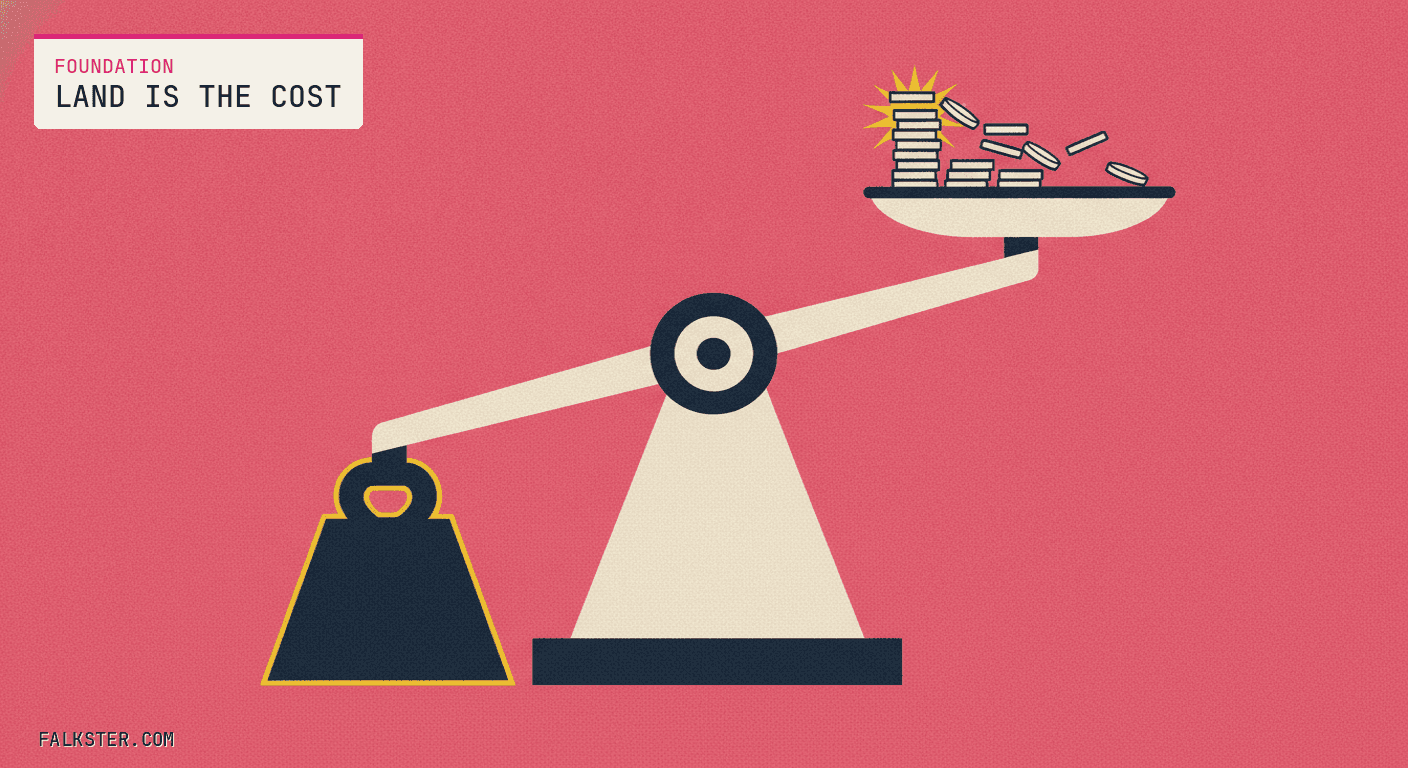
Read the two trend cells again. Building collapsed. Landing held. That is not a small shift in proportions. It is an inversion.
When building a feature cost three months of engineering and landing it cost a few weeks of GTM attention, building was rationally the thing you managed, budgeted, and staffed for. The landing cost was real but it was a rounding error next to the build. So orgs built the muscle, the rituals, and the org chart around the expensive part, and treated landing as something that mostly happened on its own once the good thing shipped.
Now the build cost is the rounding error and the landing cost is the mountain. But the org chart, the budgets, and the definition of done did not move. Companies are still pouring their planning energy into the column that fell to near-zero and assuming the column that now dominates. That is the mechanism behind twelve builders shipping twelve products and landing none: twelve times the build spend, which is cheap, and zero times the land spend, which is where the outcome actually lives.
You do not fix this with a tool. You fix it by moving money and a name to the right column.
Try this week
Take your last launch and price both columns honestly. Count the engineer-weeks it took to build. Then estimate, without flinching, the months of sustained attention it would take to actually land it: onboarding built and staffed, adoption driven by a named person, value proven and reinforced past week one.
Now look at what you actually budgeted. If you funded the build and assumed the landing, you have found the gap, and it is the same gap almost everyone has. Move some budget and, more importantly, one named owner to the right column. The next post is about who that owner should be, because right now, on your org chart, it is nobody.
Frequently asked
What is the landing ledger?+
A line-by-line comparison of what it costs to build a product versus what it costs to land it: where the cost lives, who pays it, when it is incurred, how visible it is, and which way the trend is moving. The punchline is that building costs collapsed toward zero while landing costs stayed flat, so the ratio between them flipped, and most orgs still budget as if building were the expensive part.
Why did building get cheap while landing did not?+
Building is a technical problem, and AI is very good at technical problems. Landing is a human problem: getting a person to abandon an existing habit and adopt a new one, then keep it. No model changes how long it takes a customer to trust a tool, rewire a workflow, and stick with it. Cheap building did nothing to the human timeline of behavior change, so the cost that used to be dwarfed by engineering now dominates.
Where does landing cost actually live?+
Mostly on the customer's side of the glass, which is why companies miss it. Build cost is a line item inside your org: salaries, compute, tickets. Landing cost is paid in the customer's switching effort, the sustained GTM attention it takes to drive adoption, and the change management no one budgeted. It is real money and real time, but it does not show up as your headcount, so it goes unmanaged.
How is landing cost different from customer acquisition cost?+
CAC gets you the signup or the contract. Landing cost gets you the durable behavior change after the signup, which CAC does not cover and most models stop measuring. You can have a healthy CAC and a total landing failure: the customer paid, onboarded, and churned in month two. Landing cost is the spend between 'they bought it' and 'they would be annoyed to lose it,' and it is usually unowned and unfunded.
What is the failure signature of underfunded landing?+
Month-two silence. The build succeeded (it works), the launch succeeded (they signed up), and then usage decays because nobody funded the sustained work of turning availability into habit. On a dashboard it looks like a retention problem or an activation problem. Underneath it is a budgeting problem: you spent the falling cost and starved the dominant one.
What should a product leader do with this ledger?+
Price both columns for your last launch. Count the engineer-weeks to build it and, honestly, the weeks of sustained attention it would take to land it, then look at which one you actually budgeted. If you funded the build and assumed the landing, you found your gap. Move budget and a named owner to the right column, because that is where the constraint now lives.

Comments (0)
Sign in with LinkedIn to leave a comment.
Sign in with LinkedIn