The short version
Google published a whitepaper, The New SDLC With Vibe Coding, authored by Addy Osmani (a Director at Google Cloud AI) with Shubham Saboo and Sokratis Kartakis. It draws a sharp line between vibe coding, which is prompt-and-ship development optimized for speed to first output, and agentic engineering, which is AI development with structure: specs, guardrails, evals, and review. The key picture is a cost curve. Vibe coding starts cheap and climbs steeply. Agentic engineering costs more upfront and then flattens. The two cross, and past the crossover point vibe coding costs 3 to 10x more per feature. That is a CapEx versus OpEx story: vibe coding is low CapEx and high OpEx, agentic engineering is the reverse. The durable principle is the one I have bet Falkster on, structure scales and vibes don't, and the practical move is to decide whether a thing is a prototype or a product before the curve turns on you.
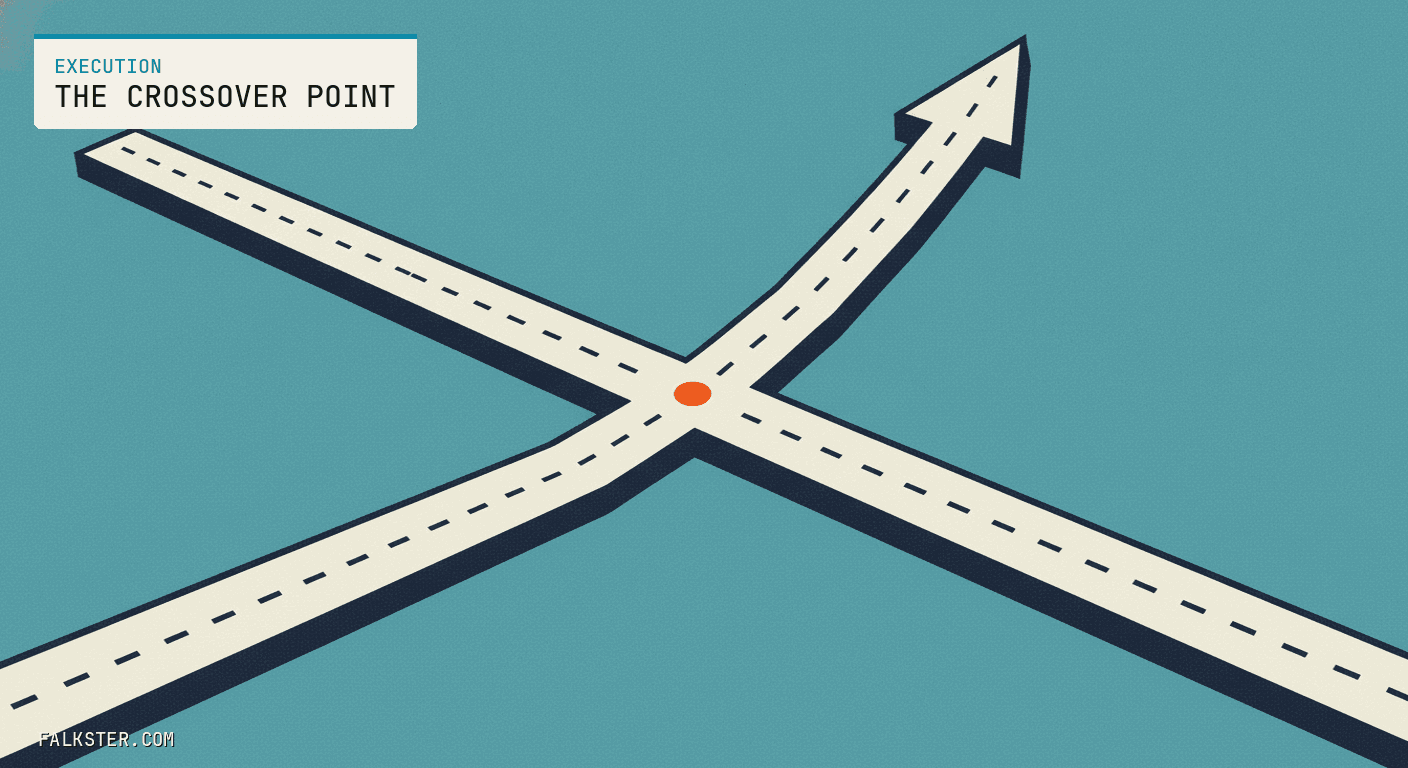
The chart on this page is my redraw of the cost curve at the heart of the whitepaper. I have recreated it rather than repost Google's own figure, so to see their original version for reference, read Google Cloud's overview of vibe coding and this summary of the new SDLC.
The whitepaper, in brief
If you came here looking for the paper itself rather than my read of it, here is what it is and what it says. My commentary starts in the next section.
What it is: The New SDLC With Vibe Coding, a whitepaper published by Google.
Who wrote it: Addy Osmani, a Director at Google Cloud AI, with Shubham Saboo and Sokratis Kartakis.
The distinction it draws: vibe coding is the prompt-and-ship loop, describe what you want, accept what the model returns, move on. Agentic engineering is AI development with structure around it: specs, guardrails, evals, and review.
The central claim: cost of ownership over time follows two different curves. Vibe coding starts near zero and climbs steeply as shortcuts compound into rework and regressions. Agentic engineering costs more upfront and then flattens. The two cross, and past the crossover the paper puts the gap at 3 to 10x more per feature for vibe coding.
The line they use for it: structure scales, vibes don't.
Where to read it: Google Cloud's overview of vibe coding, and this independent summary of the new SDLC.
Why it matters
Google just put a cost curve on the thing I have been betting Falkster on. It is not subtle about which of the two survives contact with a real codebase.
Four words carry the whole thesis. Structure scales, vibes don't. That is easy to nod along to and expensive to act on, because the moment structure costs you anything is always the moment you have the least appetite to pay for it.
The chart is the argument
Skip the prose and look at the curve. Cumulative cost of ownership on one axis, features shipped over time on the other. Two lines.
Vibe coding starts at almost zero. No setup, no platform, no specs, just output. So early on it wins, and it wins loudly, because the only metric it optimizes is speed to first working thing. Agentic engineering starts higher, because you paid for structure before you got to see anything work.
Then the lines cross. The vibe coding curve bends upward and keeps climbing, because every shortcut compounds into rework, regressions, and code nobody can safely change. The agentic curve flattens, because the structure you bought early keeps catching the problems the vibe loop would have shipped. Google's number for the gap past the crossover is 3 to 10x more per feature.
Vibe coding is not cheaper. It is cheaper first. The whole question is whether you cross the point where first stops mattering, and almost everything you intend to keep does.
It is a CapEx versus OpEx decision
The cleanest way to read the chart is as an accounting choice, and it is the same choice I write about in why gross margin is your job now.
Vibe coding is low CapEx, high OpEx. You pay nothing to start and everything to maintain. Agentic engineering inverts it: a real upfront cost to build the substrate, then low marginal cost per feature because the structure does the carrying. The crossover point is just the moment the rising OpEx of vibes overtakes the amortized CapEx of structure.
The trap is the quiet graduation
Nobody decides to take on the high-OpEx path. They drift into it. A prototype gets a demo, the demo gets a customer, the customer gets a second feature, and at no point did anyone stop to say this is a product now, it needs structure. The thing graduates from prototype to production without ever paying the structure tax, and you hit the crossover without noticing until maintenance is eating the team alive.
This is the same failure I described in the prototype graveyard, seen from the cost side. Cheap to build is not the same as cheap to own.
Decide whether a thing is a prototype or a product before you build it. Vibe code the prototype and throw it away. Put structure under the product before the curve turns.
What agentic engineering actually means in practice
The paper keeps it abstract. Here is the concrete version I run. Write the eval as the spec, so the definition of done is a test the agent has to pass, not a paragraph it can interpret. Treat prompts as versioned operations, not one-off magic. And keep vibe coding for the internal tools and throwaways where the crossover never arrives, because you will delete the thing before maintenance matters. Every time I have put that argument in public the same six objections come back, and I answered them one at a time here.
That is the same human role the whitepaper points at: specification, evaluation, and architectural judgment. The model writes the code. You own the structure that decides whether the code is worth keeping, which is exactly the line in the old PM versus product builder ledger.
The AI-native teams everyone points to, like Cursor and OpenAI's Codex, did not get fast by vibe coding. They built the substrate first. That is the same reason I can run Falkster as a company of one, and the same reason I want to kill the "I built it in a weekend" flex: the applause goes to speed, but the value lives in structure.
Pick one thing to try this week
Take the last thing your team vibe coded into production. Ask one question: have we paid the structure tax on it yet, or are we just not at the crossover point yet? If it has no eval, no guardrails, and no review, you are not saving money. You are accruing it as debt, and the interest rate is 3 to 10x. Pick the one piece that matters most and put structure under it before the curve turns.
Sources: Addy Osmani, Shubham Saboo, and Sokratis Kartakis, "The New SDLC With Vibe Coding" (Google). See also Google Cloud's overview of vibe coding and the working-software summary of the new SDLC.
Also on Medium
Full archive →Frequently asked
What is the vibe coding crossover point?+
It is the moment on the cost curve where vibe coding stops being cheaper than agentic engineering and becomes more expensive. Vibe coding wins early because it has almost no upfront cost and gets you to a first working output fast. Agentic engineering costs more upfront because you build structure first: specs, guardrails, evals, and review. As you ship more features over time, the vibe coding curve climbs steeply while the agentic curve flattens, and they cross. Past the crossover, Google's whitepaper puts vibe coding at 3 to 10x more per feature.
What is the difference between vibe coding and agentic engineering?+
Vibe coding is intuitive, prompt-and-ship, human-in-the-loop development optimized for ideation and speed to first output. Agentic engineering is AI development with structure: you add specifications, guardrails, evals, and review so the system stays reliable as it grows. The slogan from Google's whitepaper captures it: structure scales, vibes don't. Vibe coding is the right tool for a prototype or a throwaway. Agentic engineering is the right tool for anything you intend to keep.
Is vibe coding bad?+
No. Vibe coding is the fastest way to a first working output, and that is real value when you are exploring or validating an idea. The mistake is treating a tool built for speed to first output as a tool for sustainable scale. Vibe coding is a loan against future maintenance, and the interest comes due at the crossover point. Use it to learn, then convert to structure before the curve turns on you.
Who wrote the Google vibe coding whitepaper?+
The whitepaper, titled The New SDLC With Vibe Coding, was authored by Addy Osmani, who is a Director at Google Cloud AI, along with Shubham Saboo and Sokratis Kartakis. It draws a sharp line between vibe coding and agentic engineering and argues that the durable principles are: structure scales, AI amplifies your existing engineering culture, and the human role shifts toward specification, evaluation, and architectural judgment.
What is the CapEx OpEx framing of vibe coding?+
Vibe coding is low CapEx and high OpEx: almost no upfront investment, but high running costs as bugs, regressions, and unmaintainable code accumulate. Agentic engineering is the opposite: higher upfront CapEx to build the substrate, then low marginal running costs because the structure catches regressions and absorbs change. The crossover point is where the OpEx of vibe coding overtakes the amortized CapEx of agentic engineering.
How do you avoid the vibe coding trap?+
Decide upfront whether what you are building is a prototype or a product. For a prototype, vibe code freely and throw it away. For anything you intend to keep, invest in the substrate before the crossover: write the eval as the spec, add guardrails, and make review part of generation. The trap is letting a prototype quietly graduate into production without ever paying the structure tax, so you hit the crossover without noticing until maintenance is eating you alive.

Comments (0)
Sign in with LinkedIn to leave a comment.
Sign in with LinkedIn