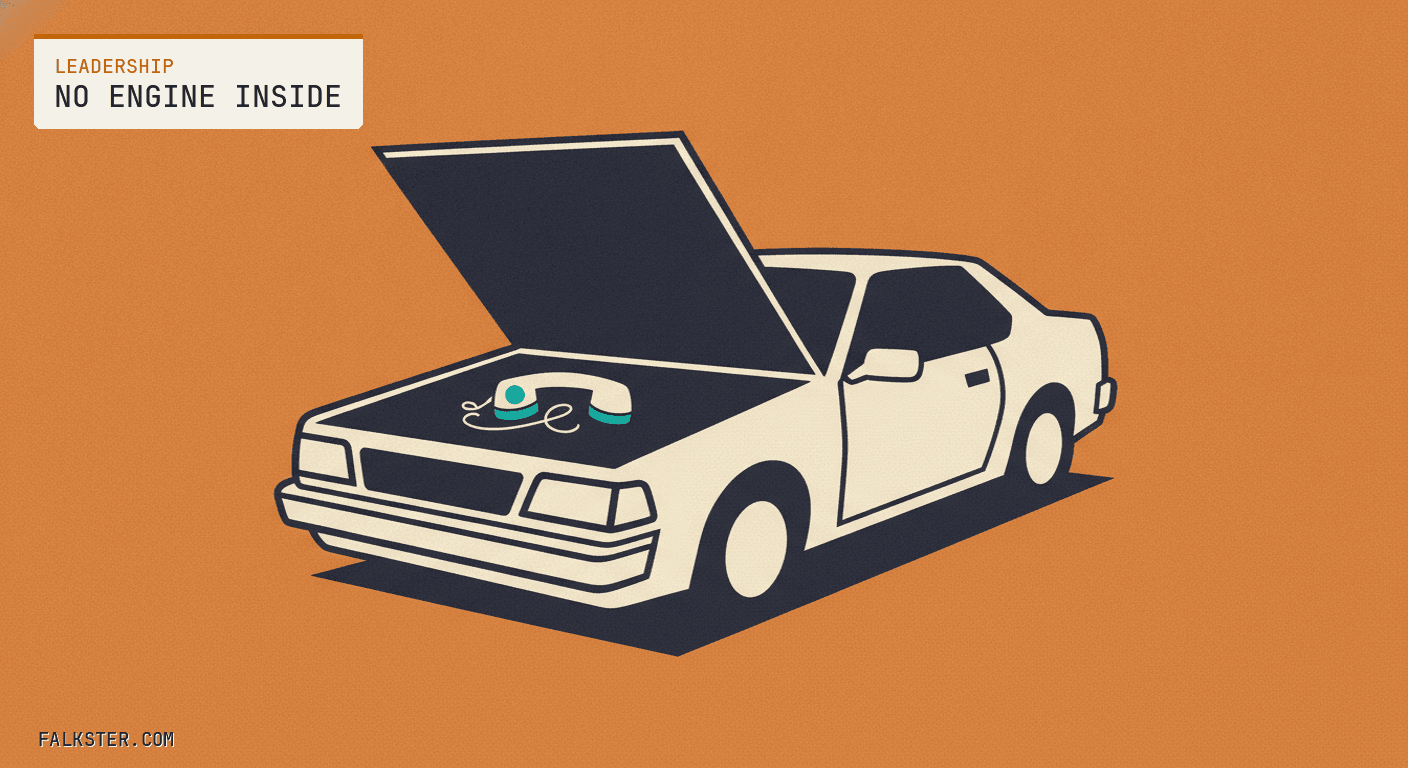
Salesforce published an AI ROI roundup this week under the headline "Getting to ROI: How Brands Turn Cost Centers into Revenue Engines with AI." The lead case in it holds up. The headline is what I would put on the kill list, because it will be on a slide in your next planning meeting as if it applied to everyone.
The short version
The AI ROI story of the moment is that agents turn a support cost center into a revenue engine, and Salesforce's own example is Canada Goose: Agentforce resolves 89% of routine messaging inquiries and 15% of calls, and the former call center now brings in millions in revenue. That is the IKEA play, where Billie resolved about 47% of 3.2 million interactions and 8,500 staff moved into a remote design channel worth €1.3 billion in FY22. It works only when unserved demand sits next to the work you automated. Most support queues do not have that. Kill the slogan as the default and ask two questions first: what do the people contacting us want that we do not sell them, and if nothing, what is the outcome and who reports it. I learned the second one at Crisis Text Line, where there was no revenue to report.
The case is real
Salesforce collected what its customers said at Dreamforce 2026. Canada Goose leads.
Staff there no longer spend the day answering when a jacket will arrive or how to exchange a sweater. Agentforce handles that, autonomously resolving 89% of routine messaging inquiries and 15% of calls. The company's Style Experts now work on personalization and personal shopping. Dennis Liut, Head of Global Customer Experience and Revenue, puts it this way: they have an Experience Center that used to be a call center, and it is bringing in millions in revenue.
I take that at face value. I have no numbers on Canada Goose beyond what the article states.
It is the IKEA play
I spent a whole post on this pattern in August, The IKEA Story Does Not Prove What You Think It Proves. The facts: Ingka's chatbot Billie handled about 3.2 million interactions between 2021 and 2023 and resolved roughly 47% of them. Ingka reskilled 8,500 call center staff into remote interior design advisers. The remote selling channel produced €1.3 billion in FY22.
What IKEA did well was read the residue. The contacts Billie could not resolve were people asking whether the sofa would look right in their living room. That is a different job, with a purchase attached. The staff already knew the catalog cold.
The lesson I wrote down was narrow. Freed capacity becomes a new business line only when there is unserved demand sitting next to the work you automated.
Canada Goose passes that test. Someone buying an expensive parka will happily talk to a person about fit and what goes with it. The demand was there before the agent arrived. Automation cleared the room for it.
Most queues are not that queue
Now take a B2B software support queue. A customer files a ticket because an integration failed. Fixing it well is valuable. It does not come with a second purchase. Someone resetting a password wants the password reset and nothing else from you.
I made this point about Salesforce's own support organization in the IKEA post. It ran the same play, moving people toward services, sales, and customer success. Its queue just did not contain a billion euros.
So when "cost center to revenue engine" becomes the headline, a support leader with the third kind of queue gets handed a promise they cannot keep. The business case says revenue. The queue says password resets. A year later the project is judged against a number that was never in it.
The honest alternatives are in the same article
Two other customers in the piece describe something else, and I think they are the more useful examples for most teams.
Canon's Bill Duval talks about pivoting the service organization from a cost center to a value center. Agents take the questions that do not need a person, customer effort goes down, and the voice of the customer gets captured and fed into product development. He calls that incredibly valuable. It is not a revenue line.
Megan Rauber at Southwest says they use real chat data to decide where to deploy next, and that CSAT keeps improving week over week as they add capabilities.
Even the article's own summary says value centers. Revenue engines is the headline's word.
What I learned with no revenue to point at
I ran product at Crisis Text Line. There was no revenue model. I wrote about it in Product Management Without Revenue Made Me Better.
The first quarter I kept reaching for proxies. Engagement, session length, messages sent. The team punctured each one with the only question that counted: did the person end up safer? A longer session could mean a better conversation or a person in more distress.
That job taught me that revenue lets you skip defining the outcome. The number goes up and you stop asking. A support organization told to become a revenue engine gets the same pass, and if the revenue is not there, it gets nothing to stand on at all.
Kill it, and ask two questions
Retire "turn the cost center into a revenue engine" as the default ROI story. Keep it for the cases that earn it. Before the deck gets written, answer two things.
What do the people contacting us want that we do not sell them today? Read the contacts the agent could not resolve, the way IKEA did. If there is a purchase in there, name it and size it, and you have the Canada Goose case.
If the answer is nothing, what is the outcome, and who reports it? Customer effort, resolution the customer would agree was a resolution, signal into the product. Pick one, define it tightly, and put a name next to it. That plus the cost number is the ROI. For how I would price and count an outcome once it is defined, see Per-Outcome Pricing: What Gets Clearer and What Gets Terrifying.
It belongs to the argument on AI Business Models: software priced per seat is priced against a labor cost that AI removes. What the freed labor becomes is the next line of the same ledger, and for most queues the answer is a better outcome, not a new revenue line.
Related answer: Can AI turn a support cost center into a revenue engine?
Sources: Getting to ROI: How Brands Turn Cost Centers into Revenue Engines with AI, Salesforce News, October 1, 2026. The IKEA Story Does Not Prove What You Think It Proves, falkster.com, August 16, 2026. Product Management Without Revenue Made Me Better, falkster.com, March 19, 2026.
Frequently asked
Can AI turn a support cost center into a revenue engine?+
Sometimes, and the condition is specific. It works when the people contacting support want something the company does not yet sell them and the freed staff can sell it. Canada Goose customers want styling help, so its Style Experts now do personal shopping. IKEA customers wanted a room planned, so 8,500 call center staff became remote design advisers. A queue of password resets and invoice questions has no such demand in it.
What did Salesforce report about Canada Goose?+
In a Salesforce News piece of October 1, 2026, Agentforce autonomously resolves 89% of routine messaging inquiries and 15% of calls at Canada Goose. Dennis Liut, Head of Global Customer Experience and Revenue, says the company now has an Experience Center that used to be a call center and is bringing in millions in revenue.
What is the adjacent demand test?+
The lesson I drew from the IKEA story: freed capacity becomes a new business line only when there is unserved demand sitting next to the work you automated. Read what the automation could not resolve as a demand map. If those contacts have a purchase attached, there is a revenue line. If they do not, there is not, and no amount of reskilling creates one.
What is the ROI of support automation when there is no adjacent demand?+
The cost number and the customer outcome, stated plainly. The same Salesforce piece has two examples. Canon's Bill Duval describes a value center, where the agent drives customer effort down and the conversations feed product development. Southwest reports CSAT improving week over week. Neither is revenue and both are worth reporting.
Why does Crisis Text Line matter here?+
Because I ran product there with no revenue at all, and it was a harder scoreboard than any revenue target. Every proxy I reached for was punctured by one question: did the person end up safer? A support organization that cannot honestly promise revenue has to define its outcome with the same precision.
What should replace the slogan in a business case?+
Two questions, answered before the deck is written. What do the people contacting us want that we do not sell them today? And if the answer is nothing, what is the outcome we are improving, and who reports it?

Comments (0)
Sign in with LinkedIn to leave a comment.
Sign in with LinkedIn