
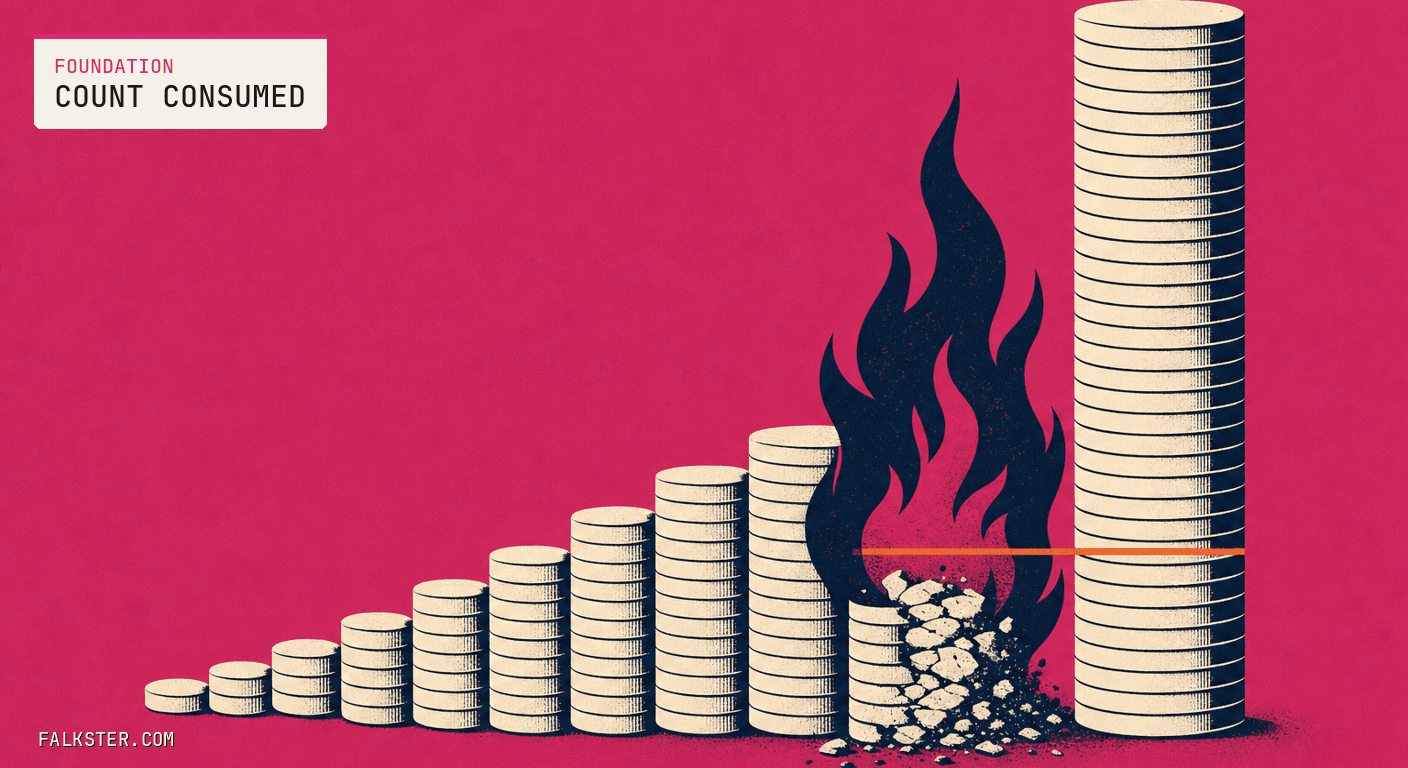
Jason Lemkin posted Higgsfield's October number on November 11, with a disclosure at the top that Higgsfield is a SaaStr Fund portfolio company and a long-time customer. This is a Ship Story: the decision underneath the number, the result, and the line I would put next to it.
The short version
- As Lemkin reports it, Alex Mashrabov sent him Higgsfield's October figure: $1.35 billion in annualized run rate, up from $1 billion in September, about $350 million added in a month, with a target of $2 billion by December.
- The decision underneath is that Higgsfield chose not to train its own foundation model and spent on workflow, model routing, and its own inference stack; gross margin turned positive in early 2026, cash flow in May, on about 150 people. Two lines in the post matter more than the headline.
- The run rate is the latest four weeks of revenue times 13, current pace rather than a trailing year.
- And about 40% of revenue is annual subscriptions while 60% is credits, top-ups, and usage beyond plan limits, which can move month to month. A credit is paid for when bought and earned when burned, and the run rate counts the first.
- In my per-seat sunset, 12 accounts sat on plan for eighteen months paying committed minimums and using less, and two were lost when the tier ended. Publish three lines next to a credit run rate: credits consumed against purchased in the same four weeks, the share that expired unused, and the burn per generation.
The number and the decision
The checkpoints, as Lemkin lists them: roughly $20 million in annualized revenue in August 2025. Roughly $200 million at the end of 2025. Over $300 million in February 2026, per Forbes. About $500 million in May, when Mashrabov was on the SaaStr AI stage. $700 million in August, alongside a $400 million round at a $5.4 billion valuation led by DST Global. $1 billion in September. $1.35 billion in October, sent to Lemkin directly. Nvidia and TCV extended the Series B in October on undisclosed terms. The target for December is $2 billion.
The decision that makes this a ship story rather than a chart is one line: "They chose not to train their own foundation model." The money went to "the workflow, model routing and its own inference stack." Gross margins were negative in 2025 and have been positive only since early 2026. The company turned cash-flow positive in May 2026. About 150 people at the $500 million mark, roughly 60 of them in core engineering. Team and Enterprise plans shipped in December 2025. Around the $300 million stage, roughly 70% of revenue came from agencies, and the average customer spent about $1,000 a year.
That is a real decision with a real result, and it runs against the instinct of most AI companies at this scale, which is to own the model. Higgsfield owns the routing and the margin instead. I would put that on the cover.
4 weeks x 13
The two lines under it
Lemkin includes two sentences that most readers will pass over on the way to the $2 billion.
First: "Higgsfield takes revenue from its latest four weeks and multiplies it by 13." Current pace, not a trailing year of collected revenue. Nothing wrong with that as a method, as long as everyone reading it knows what it is.
Second: "annual subscriptions account for about 40 percent of revenue." The other 60% is "credits, top-ups and usage beyond plan limits," which, in his words, can move month to month.
Put the two together. About $350 million of new annualized run rate in one month means that the last four weeks of revenue were about $27 million higher than the four weeks before, and 60% of that revenue is credits and top-ups. A credit is paid for when it is bought. It is earned when it is burned. Four weeks times 13 annualizes the buying.
In 41 Brands Price AI Five Ways. The Credit Is the New Seat. I argued that the market did not pick seats, work, or outcomes; it picked a private currency the vendor mints, prices, and expires, and that the real price is three numbers the customer cannot see: the exchange rate, the burn per action, and what expires unused. Most AI credit pools reset monthly or expire after 12 months without rollover. A run rate built on four weeks of credit purchases carries all three of those numbers inside it, invisibly.
The gap, from the other side
I have been on the wrong side of the difference between paid for and used. In my move from per-seat to outcome pricing, which I wrote up in Ask the Fourth Question First, 12 accounts sat on the tracker as on plan for eighteen months. Migrated on paper. Paying their committed minimums. Using less than the minimum, month after month, and nobody escalated because the dashboard said on plan. When the legacy tier ended we lost two of them.
The dashboard was not wrong about the money. The minimums were paid. It was wrong about the business, because the number it showed was purchased and the number that predicted the renewal was consumed. That is the same gap a credit run rate opens, at a scale where the gap is measured in hundreds of millions. The five contract lines in Per-Outcome Pricing: What Gets Clearer and What Gets Terrifying, unit definition, dispute window, arbitration, committed minimum, and price ceiling, exist because paid and used come apart the moment the unit is not a seat.
The SaaS to AI Business Models thesis is that software priced per seat is priced against a labor cost AI removes, so the pricing has to move to the outcome and the margin structure moves with it. Credits are the halfway house: not a seat, not an outcome, a prepayment for usage. Higgsfield's margin turn says the usage side of that is now priced right. The run rate says nothing about how much of the prepayment turns into usage.
The three lines
So the number to publish next to a credit run rate is not one, it is three, and a company with positive gross margin and a 60% credit mix has every one of them in its billing system already.
Credits consumed against credits purchased, in the same four weeks the run rate is computed from. If the ratio is near one, the run rate is usage. If it is well under one, the run rate is inventory.
The share of credits that expired unused last period. That is revenue the customer paid for and did not get, and it is the first thing a CFO on the customer side finds when the renewal comes round.
The burn per generation, or whatever the unit of work is. That is the exchange rate made visible, and it is the number that moves when model costs fall, which Lemkin wrote about separately this week when his own agent stack got 72% cheaper for the same workflow.
Higgsfield's decision deserves the headline. Not training the model is the margin turn, and the margin turn is the business. The run rate is the applause. The consumed line is what the applause is for, and the company that publishes it first will have a number nobody else in the category can answer.
This week
If your product sells credits: compute consumed over purchased for the last four weeks and put it next to whatever run rate you report internally. If the two numbers are far apart, you have found your 12 accounts before the tier ends.
Related answer: What should a company publish next to a credit-based run rate?
Sources: Jason Lemkin, "Higgsfield Went From $1B to $1.35B in Run Rate in One Month. Now It's Aiming for $2B by Year-End.," SaaStr, November 11, 2026, read in full, with his disclosure that Higgsfield is a SaaStr Fund portfolio company; every Higgsfield figure is as he reports it, from Alex Mashrabov, the SaaStr AI stage, and Forbes, and the Forbes report was not opened. The 72% is from Lemkin's November 8 post on his own agent costs. The $27 million is $350 million divided by 13. The 12 accounts, the eighteen months, and the two lost are my own, from the posts linked above.
Frequently asked
What did Higgsfield report, and through whom?+
Jason Lemkin wrote on November 11, 2026 that Alex Mashrabov sent him Higgsfield's October number: $1.35 billion in annualized run rate, up from $1 billion in September, with a target of $2 billion for December 2026. His checkpoints: roughly $20M in August 2025, roughly $200M at the end of 2025, over $300M in February 2026 per Forbes, about $500M in May, $700M in August alongside a $400M Series B at a $5.4B valuation led by DST Global, $1B in September, and $1.35B in October. Lemkin discloses that Higgsfield is a SaaStr Fund portfolio company.
How is the run rate calculated?+
Per Lemkin, Higgsfield takes revenue from its latest four weeks and multiplies it by 13. That is current pace, not a trailing year of collected revenue. About 40% of revenue is annual subscriptions; the other 60% is credits, top-ups, and usage beyond plan limits, which he notes can move month to month.
What was the decision behind the margin turn?+
Higgsfield chose not to train its own foundation model and spent on the workflow, model routing, and its own inference stack. Gross margin was negative in 2025 and turned positive in early 2026; the company turned cash-flow positive in May 2026, on about 150 people at the $500M mark, roughly 60 of them in core engineering.
Why is a credit run rate different from a subscription run rate?+
A credit is paid for when it is bought and earned when it is burned. Four weeks of credit purchases times 13 annualizes the buying, not the using. In my per-seat sunset, 12 accounts sat on the tracker as on plan for eighteen months, paying committed minimums and using less than the minimum, and we lost two when the legacy tier ended. The dashboard said on plan until it did not.
What should a company publish next to a credit run rate?+
Three lines, all in the billing system already: credits consumed against credits purchased in the same four weeks, the share of credits that expired unused, and the burn per generation. Together they say whether the run rate is usage or inventory.
Is this a criticism of Higgsfield?+
No. The decision not to train a model is the story, and the margin and cash-flow turn are the result. The argument is with the scoreboard. A 60% credit mix annualized at four weeks times 13 is the applause; the consumed line is the business, and a company with positive gross margin can show it.
Sign in with LinkedIn to leave a comment.
Sign in with LinkedIn