
On November 1, Rich Holmes put two numbers in the same issue of Department of Product. Ramp's CEO, Eric Glyman, says non-engineers shipped more than 7,000 pull requests last quarter. And about 11% of PostHog's merged PRs in October were opened by PostHog's own product, after a scheduled agent found something worth acting on.
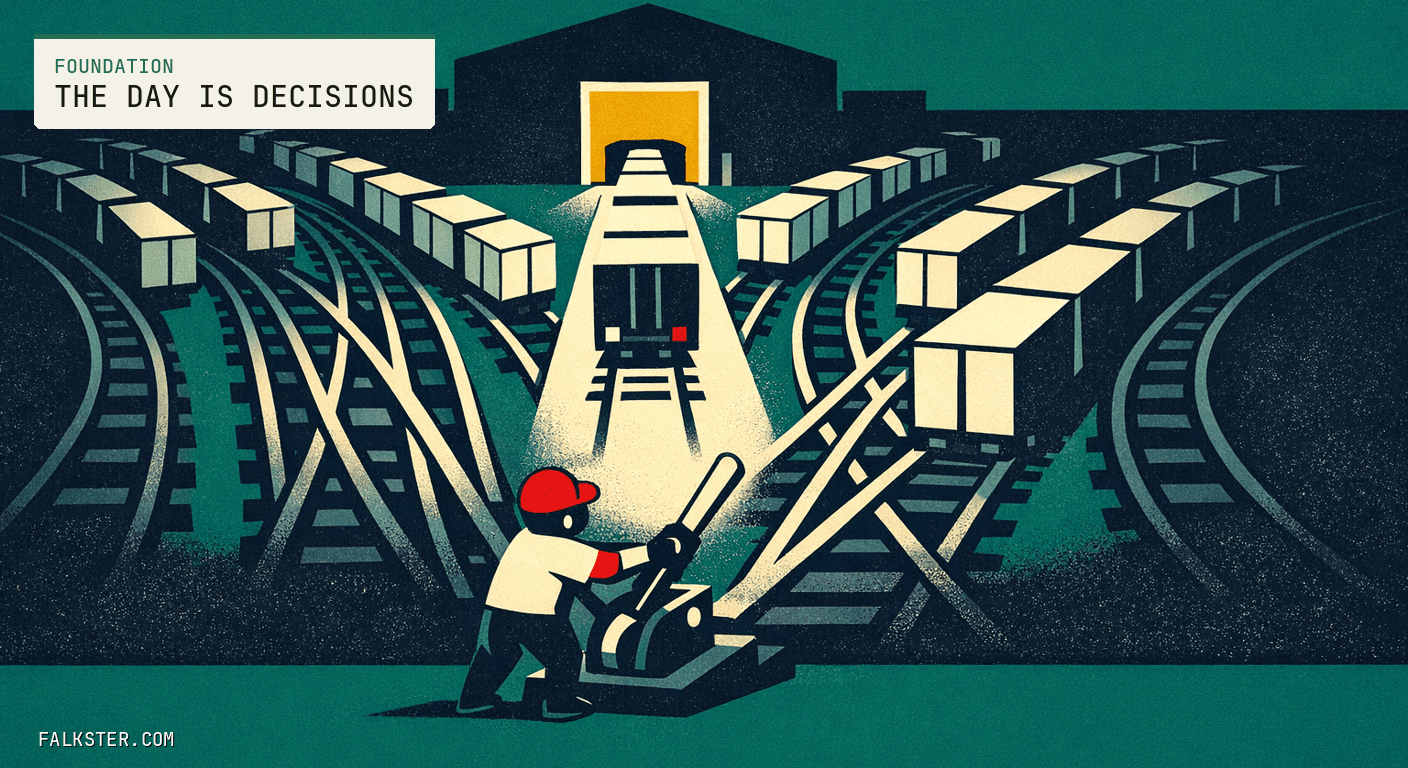
Read them together and the PM's day flips. Nothing waits on the build anymore. The build shows up on its own, overnight, from people who aren't engineers and from agents that nobody asked. What's left for the PM is deciding.
This is part 2 of The PM Transition. Part 1 said the PM becomes the Product Builder. This part is about what that person actually does between nine and six.
The short version
- When agents and non-engineers produce changes faster than anyone can review them, the PM's day stops being about producing work and becomes a queue of decisions: which proposals ship, which die, and which tell you the bar itself is wrong.
- Ramp says its non-engineers shipped more than 7,000 pull requests in a quarter, and PostHog says about 11% of its October merged PRs were opened by its own product, both as Rich Holmes reports them.
- Jina Yoon's PostHog numbers show the ratio that matters: one scheduled agent filed 72 reports since July and 11 became merged fixes, and her rule for agents that propose changes is human review first.
- So the PM's scarce resource is good decisions per day, the durable artifact is the bar the decisions are made against, and hiring shifts to judgment, which is why Anthropic's Felix Rieseberg now screens for prototypes that show taste instead of running a coding interview.
- And because the queue fills from design, product marketing, and the field as well as from the PM's own eval, it needs one owner. That's the CPO.
The work arrives already built
Here's what changed. A year ago a PM's week had a natural rhythm set by engineering capacity. You argued for a slot, you got one, you waited.
That rhythm is gone at the companies Holmes is writing about. At Ramp, people outside engineering are shipping code at a rate of thousands of changes a quarter. At PostHog, the product watches itself and opens its own fixes. Neither company is asking the PM to write the ticket first.
The useful detail is in Jina Yoon's PostHog newsletter from October 26. One of their scheduled agents hunts flaky tests every three hours. Since July it has filed 72 diagnostic reports. Eleven led to merged fixes. Her rule for the agents that propose changes to their own prompts is blunt: they have to bring real evidence from past runs, "and proposals have to go through human review."
That's an engineering example. But 11 out of 72 is the ratio I'd put on every PM's wall, because it's the shape of the job on the product side too. The agent proposes a lot. Most of it isn't worth shipping. Somebody has to say which part is, and say it fast enough that the good fix doesn't sit for a week behind a meeting.
11 of 72
What the day looks like
I think the PM's day settles into four blocks. None of them is writing a document.
The morning is the queue. What did agents open overnight, what did the eval flag, what did customers say in the transcripts. Triage it the way an editor triages a desk, which is the idea behind the PM as editor chapter. Most items get a fast no.
The middle of the day is customers. This is the part agents can't do for you, and it's the part that makes the afternoon good. You're not collecting feature requests. You're collecting the rows that tell you whether a proposal is right.
The afternoon is decisions. Ship it, kill it, or the harder third option: notice that a proposal looks fine and passes and is still wrong, which means the bar is wrong. Rewriting a row in the eval is the highest-value thing a PM does all week, because it changes every decision the agents make after it.
And the day ends by writing tonight's brief. Jayesh Govindarajan, who runs Salesforce's Agentforce org, told Aakash Gupta the agent-native move is to do a task by hand a few times, then teach an agent to do it. That's the last block. Whatever you did by hand twice today becomes an instruction the fleet runs tonight.
So the constraint moves. It isn't build capacity, and it isn't even ideas. It's how many good calls one person can make in a day, and how quickly a call turns into the next night's work.
Judgment is what gets hired
Hiring is already moving to match. Felix Rieseberg, an engineering manager at Anthropic, wrote on October 27 that he's stopped giving coding interviews, as Alina Maria Stan reports in The Next Web. He scans for small prototypes that show "taste, empathy, and principled thinking," and he says he hasn't yet worked out how to interview people who build well with AI.
That's an engineering seat, and the PM version is easier to design. Hand the candidate a real queue: twenty agent proposals, the customer context, and the current eval. Ask which five ship and why, and which one tells them the eval is wrong. The answers tell you more than any product sense case I've run. A candidate who approves everything that passes hasn't understood the job. A candidate who rewrites the bar has.
One queue, one owner
Now the part that decides whether any of this works.
The queue doesn't fill from the PM's eval alone. Design's repair rate says which state failed and generates fixes. Product marketing's claim lives in a file the PM and PMM now write together. The forward deployed engineer hands back what the customer taught them as eval rows. The CPO series argued this week that the field reports to product because the clock from a field finding to a fix is measured in hours.
All four of those signals turn into proposals in the same queue. If design, PMM, and the field answer to three other executives, each proposal carries a second yes from someone with a different scorecard. The agent opened the change in minutes. The approval takes a quarter.
So the queue needs one owner and one number. That's the case The Product OS makes as a whole, and the reason The CPO Transition keeps landing on the same seat: the CPO is the one executive who answers for whether what shipped got used, and that's the only number every proposal in the queue is trying to move. The Product Builder runs the queue. The CPO makes sure there's only one.
What I expect
These are my predictions, not facts.
By the end of 2027, at AI-native software companies, most changes a PM approves in a given week will have been proposed by an agent, not written up by a person.
By 2028, product leaders plan PM capacity in decisions per week, not features per quarter, and the hours from signal to decision is a number every product review reads. The best PMs will keep a decision log the way they used to keep a roadmap, because it's the one artifact that shows their judgment.
One thing to try this week
For five working days, log every product decision you make. Three columns: what you decided, which signal triggered it, and how many hours it sat before you decided.
At the end of the week, look at the three slowest. For each one, write down who else had to say yes. If the answer is a person in another org, you've found the seam where your loop loses days. If the answer is nobody and it still sat, the bar wasn't written down.
Sources: Rich Holmes, "Reddit's CEO warns Google's AI Mode does not drive traffic," Department of Product, November 1, 2026, for the Ramp and PostHog figures as Holmes reports them. Jina Yoon, "Jobs every engineer should automate with agents," PostHog, October 26, 2026. Alina Maria Stan, "Anthropic manager drops coding interviews because Claude is better at them," The Next Web, October 28, 2026, on Felix Rieseberg's October 27 post. Aakash Gupta with Jayesh Govindarajan, "What an AI-Native Product Team Actually Looks Like at Salesforce," Product Growth, November 3, 2026.
Part of the running argument on AI Product Management: the job did not get harder, the parts we trained people for got cheap, and what's left is defining good and deciding fast against it, inside one loop under the CPO.
Related answer: What do Ramp's 7,000 non-engineer PRs mean for PMs?
Frequently asked
What does a PM's day look like when agents do the building?+
It's a queue of decisions. Agents open changes overnight from customer signal, error data, and the eval. The PM's morning is triage, the middle of the day is customers, the afternoon is ship, kill, or rewrite the bar, and the day ends by writing the brief the agents run tonight. The constraint is how many good decisions one person can make, not how fast anything gets built.
How many pull requests do non-engineers ship at Ramp?+
As Rich Holmes reports in Department of Product on November 1, 2026, Ramp's CEO, Eric Glyman, says non-engineers shipped more than 7,000 pull requests last quarter. Holmes also reports that about 11% of PostHog's merged PRs in October were opened by its own product after a scheduled agent found something to act on.
Why is the ratio of proposals to merged fixes the PM's job?+
Because most proposals aren't worth shipping. Jina Yoon reports that one PostHog scheduled agent, running every three hours since July, filed 72 diagnostic reports and 11 led to merged fixes. Her rule for agents that propose changes is that proposals go through human review. On product changes, someone has to decide which proposals ship, quickly, against a bar they wrote down. That's the PM.
How should companies hire PMs for this?+
Hire for judgment on a queue, not for documents. Felix Rieseberg at Anthropic says he dropped the coding interview and looks for small prototypes that show taste, empathy, and principled thinking. My version for PMs: hand the candidate a real queue of agent proposals and the customer context, and ask which ship and why.
Why does the PM's decision queue belong under the CPO?+
Because the queue fills from every seat: design's repair rate, product marketing's claim, the field's handback, and the PM's eval. If those land in four queues owned by four executives, an agent opens the change and nobody can say yes. One queue needs one owner and one number, and the CPO is the executive who answers for whether what shipped got used.
What are Falk's predictions in part 2?+
Two, labeled as predictions. By the end of 2027, at AI-native software companies, most changes a PM approves in a given week will have been proposed by an agent, not written up by a person. And by 2028, product leaders plan PM capacity in decisions per week, and the hours from signal to decision is a number every product review reads.
Sign in with LinkedIn to leave a comment.
Sign in with LinkedIn