
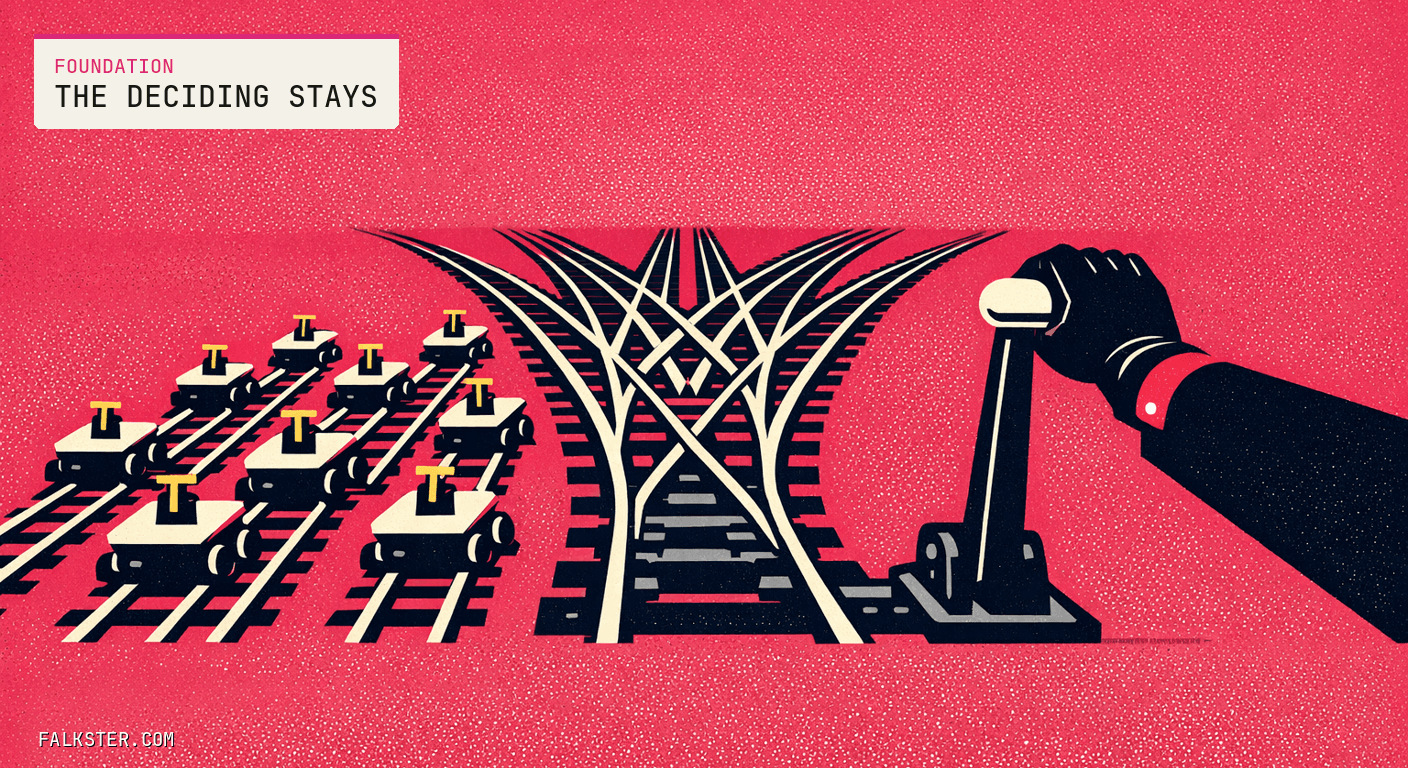
On November 10, IBM and Microsoft announced Imagine Enterprise, an agent platform for regulated industries. Look at the order in which the release describes what a customer gets. IBM Consulting brings "a fleet of more than 6,000 AI agents and assets." Then, for qualifying engagements, "forward-deployed engineers from both companies can help customers move from experimentation to production." Mohamad Ali, who runs IBM Consulting, describes the whole thing as bringing "human expertise and digital labor together."
The agents arrive first. The engineers come attached.
Two weeks earlier Kevin Shatzkamer, a corporate vice president for forward deployed engineering at Microsoft, described the unit of deployment the same way: small teams "augmented with coding assistants and deployment agents." The same day, on ServiceNow's earnings call, Amit Zavery said the company is building "AI implementation agents" and that when customers go live, "a lot of the heavy lifting is done by AI."
Three of the largest enterprise vendors, inside two weeks, all saying the on-site build is moving to agents. So what does the human still own? Four decisions, and one address to send them to.
This is part 17 of The FDE Transition, part of The Product OS.
The short version
- When agents do the on-site build, the forward deployed engineer keeps the deciding: which workflow to automate and which to leave alone, how the customer's best people make the hard calls, what counts as good enough to go live, and what the product should absorb for everyone.
- IBM and Microsoft now ship more than 6,000 prebuilt agents and assets with engineers attached for qualifying engagements, Microsoft's own FDE leadership describes teams augmented with deployment agents, and ServiceNow's chief product officer is building implementation agents.
- The build work that's left is itself a product, the deployment agent, and it needs an owner with a roadmap. That owner is product.
- Every hour a human spends on site is either a decision only a person can make or a gap in the deployment agent, and the only org that can tell the two apart and act on it is one where the field and the roadmap report to the same person, the CPO.
- The number to run the field on is human hours per go-live, and it should fall every quarter.
The deployment agent is a product
Look at who's talking. Zavery is ServiceNow's president, COO, and chief product officer. The implementation agents are his. On that call the CFO sized what the included engineers cost, and part 16 was about why the customer isn't paying for them. The exit from that cost came from the product seat: "This is not a long-term engagement."
Decagon wrote it down earlier. Katherine Xiao, its director of implementations, said in June that "Agent Development Managers now own almost all of the build work that once required engineers," and that custom engineering per agent fell by 80 percent. A policy change that used to take an engineer a full sprint takes an afternoon. Those are her figures about her own company, so read them as a vendor's account. The direction matches everything else this month.
Part 13 covered the harness leaving the engineer's backpack. This is the next step. The thing that wires the connector, loads the prebuilt agent, drafts the skill, and runs the first test pass is software, and software that every deployment runs is a product. It has users, your own field team first and the customer's engineers after. It has a backlog and a quality bar. If nobody in the product org owns it, it's a folder of scripts your best FDE wrote on a plane.
That's the decision for this quarter. Name the product manager who owns the deployment agent, and put it on the roadmap next to the thing you sell.
What the agents don't get handed
Menlo Ventures published its State of Enterprise AI on November 3, by Tim Tully, Joff Redfern, Deedy Das, and Derek Xiao, built on a Morning Consult survey of nearly 400 US enterprise decision-makers. (Menlo invests in several of the vendors it covers.) It puts enterprise spending on AI deployment at $176.8 billion, up 5.4 times in a year, and it has two sentences that read like a job description for the field. Agents work where the conditions are ready, and "most enterprise markets lack these conditions." Creating them means "connecting agents to all the fragmented systems and context they need, making tacit knowledge and procedures accessible, and designing evals to help agents to improve."
Connecting systems is the part going to agents and prebuilt assets. The other two are where a person earns the seat, and I'd add one on each side.
The choice. Which workflow gets automated first, and which one never should. Xiao has the best line on it: "The scarce skills are restraint and foresight." An agent will build whatever you point it at. Somebody has to decide where not to point.
The judgment. How the customer's senior people decide the hard cases. Marco Di Santo wrote yesterday that a handover document holds what you knew, and the questions that come later are about how you would decide. That's as true of a claims adjuster or a credit officer as it is of a departing colleague, and getting it out of their heads is interview work. I wrote about his piece the same day.
The bar. What good enough to go live means, in rows the customer's own people wrote and signed. Part 12 made the case that the FDE writes the eval. With agents building, it's most of what the FDE writes.
The handback. What this deployment taught that every customer should get. Milos Mandic, who edits FDE Hub, recently took an FDE seat at Sycamore and described the work in two sentences that belong together: "Much of my day goes into directing a variety of agents," and "I sit with customers, work out what they really need, and bring that back into the product."
Directing agents is the how. The second sentence is the job.
Shatzkamer says much the same from inside Microsoft's Frontier Company. The goal of an engagement is to "transfer operating capability to the customer," and "the feedback loops into product roadmaps (and models) are still critical." He also writes that the engineer part of the title "remains non-negotiable." I agree, for a plain reason. You can't judge an agent's build if you couldn't have built it yourself.
Human hours per go-live
Once the build belongs to an agent, the field gets a new number, and it's a simple one. Count the human hours between contract and go-live. Then sort them.
Some hours are decisions: the choice, the judgment, the bar, the handback. Those are the seat. The rest are gaps. A connector the agent couldn't write. A permission model it didn't understand. A test it should have run and didn't. Every gap hour is a bug report against the deployment agent.
The scorecard from part 7 counts generalization rate, the share of field work that shipped for everyone. Human hours per go-live is the same idea pointed at the deployment itself. If it's flat for two quarters, nobody is fixing the agent. And if the decision hours go to zero, worry, because nobody's deciding.
Why this is the CPO's org
Here's the seat's piece of the argument the whole OS makes. Gap hours only turn into product if the person who logs them and the person who owns the deployment agent's roadmap answer to the same executive. Under sales, a gap hour is a cost of the deal. Under services it's billable, or would be if anyone were paying. Under the CPO it's a ticket with an owner, and next quarter's deployment needs fewer people because of it.
The decision hours need the same address. The choice is an input to product strategy. The judgment and the bar are spec, which is where design and the Product Builder pick them up; Monday's PM part argued the spec is an eval now, with rows coming from the field. The handback is the roadmap.
Part 15 argued the reporting line from the scorecard. The deployment agent makes the other side harder to argue. When the build is a product and what the human produces is product decisions, there isn't much of the field left that sits outside product. The CPO Transition has the view from the top.
What I expect
These are my predictions, not facts.
By the end of 2027, at least one large vendor reports the share of go-lives that had no vendor engineer on site. ServiceNow is the obvious candidate, since it has already said the engineers aren't meant to stay.
FDE headcount keeps rising through 2027 while human hours per go-live fall, because the number of deployments grows faster than agents take over the work. Menlo's 5.4 times is why I'd bet that way. The cuts people predict for this seat come later than they think, and they come first to teams that never measured the hours.
And by 2028 the job posting changes. Eval design and workflow judgment move above integration code in the requirements, and titles like Decagon's Agent Development Manager, or the "agent PMs" Menlo's report lists next to forward-deployed engineers, are common. The seat gets closer to product from both directions.
One thing to try this week
Take your last go-live and list everything a human did between signature and launch. One line each. Mark every line D for a decision or G for a gap.
Next to each G, write what the deployment agent would've needed in order to do it. Send that list to a product manager, by name. If you can't think of whose name goes there, you've found this quarter's decision.
Keep the D list. It's the job description for the seat in 2028.
Sources: IBM and Microsoft, "IBM and Microsoft announce a new AI agent platform designed for industry-specific transformation," Microsoft Source (November 10, 2026), a joint company release with Mohamad Ali quoted · Kevin Shatzkamer, "Thinking about the evolution of forward-deployed engineers over the last 24 months," Microsoft Command Line (October 28, 2026) · Tim Tully, Joff Redfern, Deedy Das, and Derek Xiao, "2026: The State of Enterprise AI," Menlo Ventures (November 3, 2026), an investor's report covering companies it funds · Milos Mandic, "To Write About the Work, I Have to Do the Work," FDE Hub (November 10, 2026) · Marco Di Santo, "A Document Holds What You Knew. An Agent Holds How You Would Decide.," Operational AI (November 17, 2026) · ServiceNow, Q3 2026 earnings call, with Amit Zavery, transcript via Stock Analysis (October 28, 2026) · Katherine Xiao, "Introducing Agent Development: How Decagon is redefining forward deployment," Decagon (June 22, 2026), a company blog, context
Part of the running argument on AI Product Management: AI collapsed the cost of the build, on site as much as anywhere, and what it left to people is deciding what's worth building and what counts as done.
Related answer: Who owns the deployment agent when agents do the forward deployed build?
Frequently asked
What does a forward deployed engineer still own when agents do the deployment?+
Four decisions. The choice: which workflow to automate first and which one never should be. The judgment: how the customer's senior people decide the hard cases, which has to be drawn out of their heads. The bar: what good enough to go live means, written as eval rows the customer's own people signed. And the handback: what this deployment taught that every customer should get. Connecting systems, the part that used to fill the engineer's day, is moving to deployment agents and prebuilt assets.
What did IBM and Microsoft announce on November 10, 2026?+
Imagine Enterprise, an agent platform for industry-specific processes, starting with financial services, insurance, and retail. The release says IBM Consulting brings a fleet of more than 6,000 AI agents and assets built on IBM Consulting Advantage, Microsoft provides the AI, cloud, and security technology, and forward-deployed engineers from both companies can help customers move from experimentation to production in qualifying engagements. Clients can have IBM Consulting deploy and operate it, co-innovate with IBM Consulting, or manage it themselves.
What is a deployment agent, and who should own it?+
It's the software that does the on-site build: wiring connectors, loading prebuilt agents, drafting skills, and running the first test pass. Microsoft's Kevin Shatzkamer describes FDE teams augmented with coding assistants and deployment agents, and ServiceNow's chief product officer, Amit Zavery, said on the October 28, 2026 earnings call that the company is building AI implementation agents. Software every deployment runs is a product, so it needs a product manager, a backlog, and a quality bar. Falk's view is that product owns it, under the CPO.
What is human hours per go-live?+
The count of human hours between contract and go-live, sorted into two piles. Decision hours are the choice, the judgment, the bar, and the handback, and they're the seat. Gap hours are work the deployment agent should have done and couldn't, such as a connector it couldn't write or a test it didn't run. Every gap hour is a bug report against the deployment agent. The number should fall every quarter, and if decision hours fall to zero, nobody is deciding.
Why does the deployment agent strengthen the case for the FDE org reporting to the CPO?+
Because gap hours only turn into product when the person who logs them and the person who owns the deployment agent's roadmap answer to the same executive. Under sales a gap hour is a cost of the deal, and under services it's billable time. Under the CPO it's a ticket with an owner. The decision hours are product inputs too: the choice feeds strategy, the judgment and the bar are spec, and the handback is the roadmap.
What are Falk's predictions for the agent-deployed FDE seat?+
Labeled as predictions, not facts. By the end of 2027 at least one large vendor reports the share of go-lives that had no vendor engineer on site, with ServiceNow the obvious candidate. FDE headcount keeps rising through 2027 while human hours per go-live fall, because deployments grow faster than agents take over the work. And by 2028 job postings for the seat put eval design and workflow judgment above integration code, with titles like Decagon's Agent Development Manager becoming common.
What is The FDE Transition series?+
A weekly series on falkster.com, part of The Product OS, for forward deployed engineers and the leaders building around them. Part 1 is the thesis that the FDE is the Product Builder arriving from services. Part 15 argued the FDE org reports to the CPO, part 16 covered who pays for the field team, and part 17 covers what the human FDE still owns once agents do the on-site build.
Sign in with LinkedIn to leave a comment.
Sign in with LinkedIn