
Marco Di Santo changed jobs and did something most handovers skip. He tried to leave behind how he decides, in the form of an AI agent his old colleagues can ask. This is a Rewrite, because I would keep his exercise whole and change what the result is for.
The short version
- Marco Di Santo's November 17, 2026 post in Operational AI describes handing over his role at LivePerson with an AI agent: a couple of weeks gathering material, videos of himself explaining how the work ran and why, and an agent on the transcripts that colleagues could ask how he would have handled a new case.
- His starting exercise is five recent questions where the first answer was "it depends," each written out with the decision, what was weighed, and the case that would have flipped it. Keep the exercise and rewrite the goal.
- An agent that answers what the person who left would do keeps that person as the decider, with reasons frozen on their last day.
- In forward deployed work the test of leaving is the keys line, a named person who can change the system without calling you, and 7 of the 24 engineers in Milos Mandic's State of FDE survey said their systems stay with them after handover.
- Add three fields to each decision: who decides now, what would flip it, and when it gets re-decided. Then test the agent on five decisions you held back.
What Di Santo built
His starting point is the handover document everyone has written. It lists the systems, the open items, the people to call. Then the questions arrive, and most are about a case the document does not cover: which of two requests goes first, whether an exception is fine this time.
So when he moved from LivePerson to Wonderful, he tried to hand over that part too. He spent a couple of weeks gathering what he had and creating what was missing. He recorded videos explaining how the work ran, the choices he had made, and the reasons. The agent runs on those transcripts and the rest of the material. Before he left he tried it with a few people inside the company, on new cases, expecting it to work through each one the way he would and say why.
He reports a side effect I believe. On decisions made long before, the agent could explain his reasons better than he could from memory.
His advice for anyone, leaving or not, is an exercise. Take five questions from the last few weeks where your first answer was "it depends." Write down what you decided. Then write what you took into account, in what order, and in which case you would have decided the other way. If what comes out is a clear rule, it belongs in a document. If it still depends, it is the kind of question people will bring you after you are gone.
What the agent cannot hold
The exercise is the best hour in the post. The part I would change is the sentence the agent is built to complete: here is how Marco would have handled it.
That sentence keeps Marco as the decider. The colleague who asks gets an answer with his reasoning on it, as of his last day. Two things are missing from it.
The first is time. A decision that depended on the situation depended on facts, and the facts keep moving after the videos are recorded. The agent will weigh a customer, a budget, or a priority the way they stood when he left.
The second is the name. Somebody will act on the answer. If they follow the agent, the decision was made by a person who no longer carries the consequence, and approved by nobody who does.
The forward deployed version
This shape is familiar from forward deployed work, where leaving is the job.
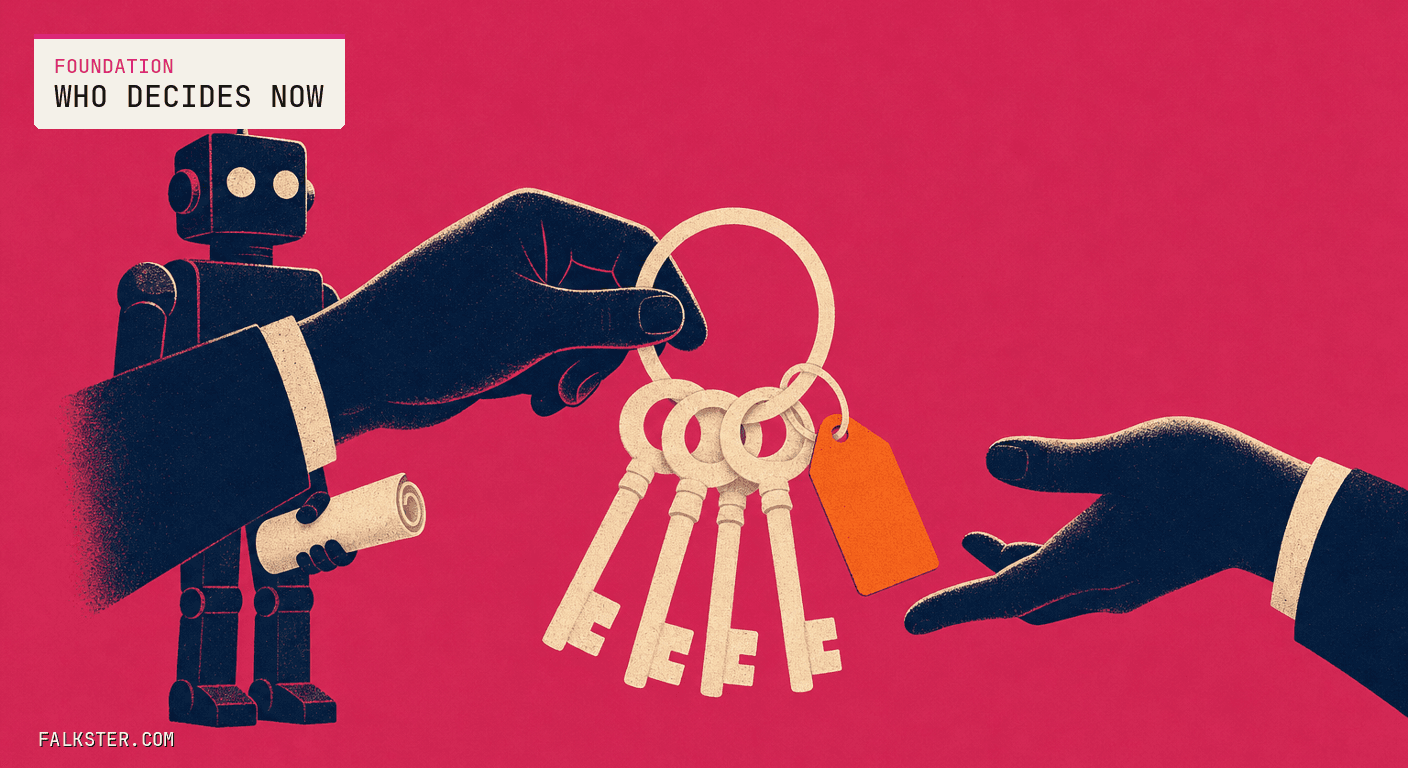
In The FDE Transition, the engineer leaves the customer at day 60 with a page, not a meeting. Month Two: The FDE Leaves, the Workflow Has to Stay gives it four lines: the promise, the signal, the watch list, and the keys. The keys line is a named person at the customer who can change the configuration without calling you. If that line is blank at day 60, the deployment has not landed.
Milos Mandic's State of FDE survey, which I wrote about in Milos Mandic Can't Tell From 24 FDEs. Seven of Them Already Answered., had 24 responses. 7 of the 24 said the systems they build stay with them after handover, and twelve spend more than a tenth of their week keeping delivered systems running.
7 of the 24
An agent trained on the engineer who left is that dependency in a politer form. The customer has stopped calling the engineer. They are asking a copy of the engineer, and the keys line is still blank.
Three fields and one test
So I would run Di Santo's five questions and add three fields to each.
Who decides this now. A name, not a role. The agent can brief that person. It cannot be that person.
What would flip it. Di Santo already asks for the case where he would have gone the other way. Make it a field of its own. When I wrote a successor brief for a pricing migration, described in The Migration Outlives the Sponsor, it had five lines, and the last one was what would make us stop.
When it gets re-decided. A date. On that date the named person either signs the answer again or changes it. Until then the agent's reasoning is a reference. After it, the reasoning is history.
Then one test before you leave. Di Santo tried his agent with a few people. I would make it countable: hold back five decisions you made that are not in the material, ask the agent, and count how many it gets the way you did. The misses tell you which videos to record in your last week.
And one habit for whoever stays. Every time the successor overrules the agent, write down why. An overrule is the handover working.
This week
Pick the five "it depends" questions and write them out the way Di Santo describes. Then put a name next to each one that is not yours. The ones where you cannot think of a name are the real handover problem, and no agent fixes that. More on what the product job turns into when the building gets cheap is in AI Product Management.
Related answer: Should you hand over your role with an AI agent trained on how you decide?
Sources: Marco Di Santo, "A Document Holds What You Knew. An Agent Holds How You Would Decide.," Operational AI, November 17, 2026, read in full. The works he cites (Polanyi, Leonard and Swap, Klein, and McKinsey's banking review) were not opened. The 24, the 7, and the twelve are Milos Mandic's State of FDE 2026 survey on FDE Hub, as I reported them in the post linked above. The day-60 page and the successor brief are my own, from the posts linked above.
Frequently asked
What did Marco Di Santo build when he left LivePerson?+
As he describes it in Operational AI on November 17, 2026, he spent a couple of weeks gathering material, recorded videos explaining how the work ran and the reasons behind his choices, and built an agent on the transcripts so colleagues could ask how he would have handled a new case. He tried it with a few people before he left, and found it also explained his older decisions better than he could from memory.
What is the five-question exercise?+
Di Santo's starting point for anyone: pick five questions from the last few weeks where your first answer was that it depends. Write what you decided, what you took into account, in what order, and the case where you would have decided the other way. A clear rule goes in a document. What still depends on the situation is what people will ask you about after you leave.
What is wrong with an agent that answers how the person who left would decide?+
Two things are missing. Time: the reasoning is frozen on the last day, and the facts it weighed keep moving. And a name: if a colleague follows the agent, the decision was made by someone who no longer carries the consequence and approved by nobody who does. The agent is a good reference for the reasons. It should not be the decider.
What is the keys line?+
It is the fourth line on the day-60 page from my FDE Transition series: a named person at the customer who can change the configuration without calling the engineer who built it. If it is blank at day 60, the deployment has not landed. In Milos Mandic's State of FDE survey, 7 of the 24 respondents said the systems they build stay with them after handover.
What should be added to each handed-over decision?+
Three fields. Who decides this now, as a name. What would flip the decision. And the date it gets re-decided, when the named person signs the answer again or changes it. My successor brief for a pricing migration had five lines, and the last one was what would make us stop.
How do you test a handover agent before you leave?+
Hold back five decisions you made that are not in the material, ask the agent, and count how many it gets the way you did. The misses show what to record in your last week. After you leave, have the successor write down every time they overrule it and why.

Sign in with LinkedIn to leave a comment.
Sign in with LinkedIn