
Yesterday Workday told investors where it's putting its field engineers. Workday makes the HR and finance software that many large companies run on. Gerrit Kazmaier, its president of product and technology, said this on the earnings call: "We are increasing our investment in forward-deployed engineers inside our product and technology team."
A forward deployed engineer (FDE) is an engineer who works on site with a customer to get the software working there. Most companies put them under sales or services. Workday put them inside product.
Then he said why. "What we learn solving a problem for one customer goes straight back into our agents for every customer."
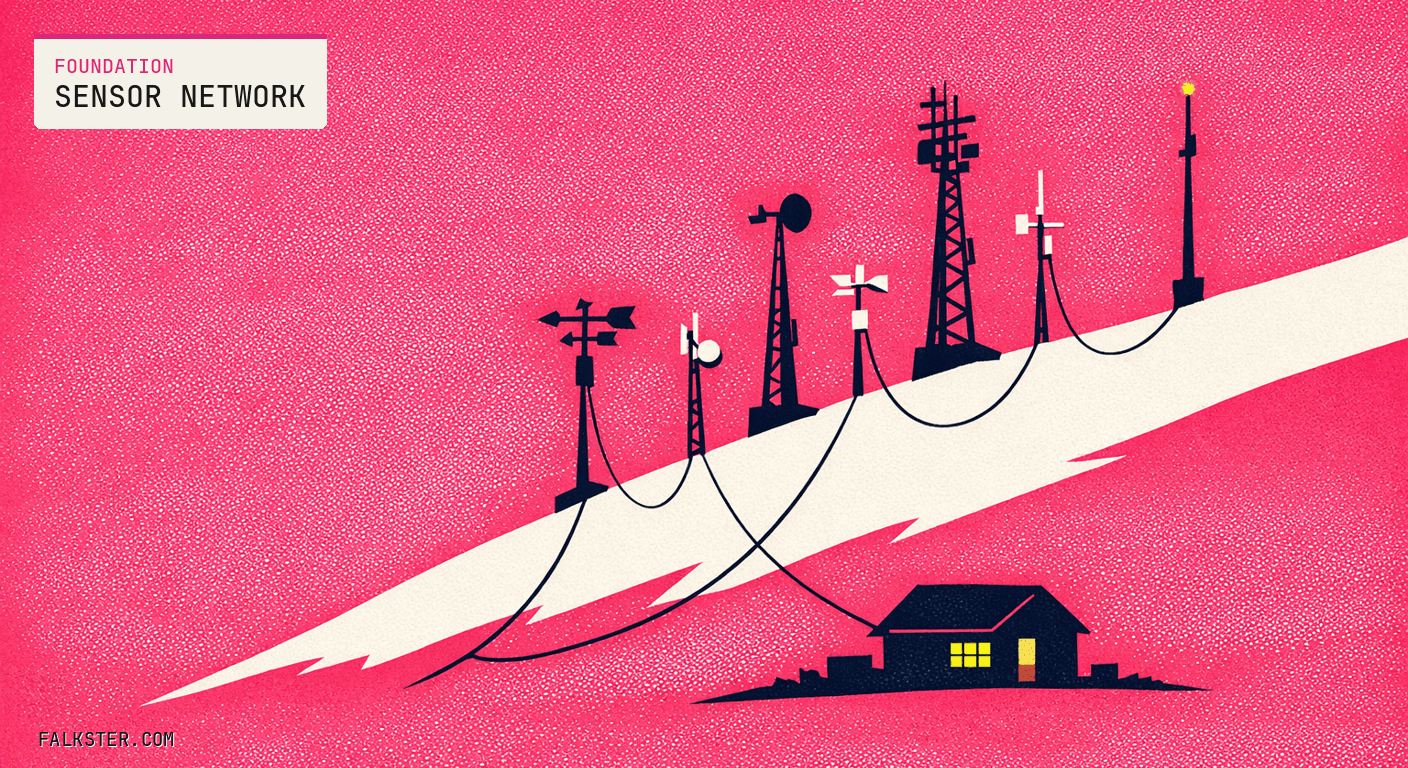
I think that sentence describes the field's job for the next few years. The field is turning into the product's sensor network. It's the set of instruments that tell the product team what's true at the customer. And the wire from a sensor to a fix is getting short enough to measure in hours.
This is part 18 of The FDE Transition, part of The Product OS. Part 17 covered what the engineer still owns when agents do the build. This part is about what the engineer sends back.
The short version
- Workday now puts its field engineers inside the product team. Its product chief says what they learn at one customer goes straight into the product for every customer. I think every software company is headed there.
- The field becomes a sensor network, and it has two kinds of sensors. People notice what a customer really needs.
- Software agents that set up the product log every question and every stuck step. Both should reach the product team the same day.
- The best form for a finding is a small proposed change with a test attached. There's one hard rule. The pattern travels to other customers, and the customer's own data and secrets never do.
- All of this works best when the field and the roadmap report to one leader, the chief product officer (CPO).
Workday moved the field inside product
Later on the call a JPMorgan analyst asked about these engineers. Here's Kazmaier's answer, from an automated transcript of the question session: "They are part of the core engineering and technology organization." They work with the largest customers on the hardest cases. Then comes the part I'd underline. Their job is also "improving our AI systems and our AI deployment technologies so we can scale this back to all of our customer base."
So the engineer has two outputs. One customer goes live. And the product gets better for everybody else.
Workday didn't give a headcount or a cost for the team, and I won't guess one. What it gave is the reporting line, and that's the news. Part 15 argued the field belongs under the product leader. Here's a large company doing it, and saying so to investors.
Aneel Bhusri, the chief executive, named the payoff. With this model, he said, agents go live in "weeks, not years."
Two kinds of sensors
The first sensor is a person. Boaz Francis runs forward deployed engineering at Wonderful, which sells an AI platform to large enterprises. Milos Mandic interviewed him for FDE Hub on November 17. Francis says his engineers build on what the company already knows. Then "they can go and contribute that knowledge back in the form of a PR or feedback."
A PR is a pull request. It's a proposed change to the product's code that someone reviews and then merges. Hold on to that word, because I'll come back to it.
He also said why this is speeding up. "The loop has become much, much faster with AI, because the building part is shortened."
The second sensor isn't a person at all. Max Wessel, a senior vice president of product at Workday, gave a number on the same call. "Deployment Agent has now responded to more than 2 million deployment queries since launch." Deployment Agent is Workday's software helper for teams setting up the product.
Think about what's in those 2 million questions. Each one is a moment when somebody setting up the product didn't know what to do next. This is my read, and Workday didn't say how it uses them. But a pile like that is a map of where the product is hard. No engineer has to write a report, because the log already is one.
Part 17 called the leftover human work gap hours. The agent's log is the other half of that picture. Gap hours show where the agent fell short. The questions show where the product did.
Monday's PM part made the same point from the product seat: discovery is a daily signal now. The field is the richest source of that signal. It comes from customers who already bought and are trying to make the thing work.
The pipe gets short
Sensors are the easy part. The wire is harder.
Most field findings still travel as stories. Someone tells one in a meeting. It lands in a chat channel, and a product manager sorts it weeks later. Part 3 set out a written packet for this, handed over at three set moments. It's still the right content. The schedule is too slow now.
Here's the pipe I'd build.
The finding gets written as a test first. That's one real case from the customer, with the answer a good product would give. Part 12 explains why the engineer writes it.
Then it becomes a pull request, the form Francis named. The engineer, or an agent the engineer directs, proposes the fix to the product itself. When agents do the building, that can take an afternoon.
A named product owner decides the same day. Ship it for everyone, keep it as a setting for this one customer, or say no and say why.
And the test stays. It runs on every release after that, so the fix can't quietly break.
Count two things. The first is hours from the finding to a fix every customer has. The second is hops, the number of reporting lines the finding crossed on the way. The Impact Loop chapter already gives this seat that measure.
Anurag Gurtu, the chief executive of Airrived, wrote a sharp guest column for Crunchbase News in October. It's about companies that lean on field engineers, and his test is a pair of questions. "What does it actually cost, fully loaded, to onboard the next customer?" And: "Does that number go down as the company scales, or does it just grow the org chart?"
A short pipe is how that number goes down. Without one he's right, and you're running a staffing business.
What never travels
There's a line here, and buyers are starting to ask about it.
Lindsay Clark reported in The Register on October 22 on what customers should check before the engineers arrive. She quotes Mukul Saha, a senior director at Gartner, the research firm. He describes the deal plainly. The engineers learn as they work, and "They're going to take back certain knowledge that makes the product better." Then: "But there's a fine line."
Suppose what goes back is one customer's edge, and it ends up helping that customer's rivals. Saha's words for that: "That would be a complete violation of the IP, right?" IP is intellectual property, the know-how a company owns.
He's right, and a sensor network makes the question sharper. So write the rule down before the first deployment.
What travels is the gap in the product, the fix, and the shape of the test. What stays is the customer's data, its rules, its prices, and anything that makes it better than its competitors. A test row that goes back gets rewritten with made-up data first.
Part 10 covered the buyer's contract. I'd add this as a clause, in plain words. And I'd show the customer the list of what went back, every month. A customer who can see the list has a reason to trust it.
Why this is the CPO's org
Here's the seat's piece of the case the OS makes.
A sensor is only useful if it's wired to something that acts. Under sales, a field finding is a note on the account. Under services, it's hours. Inside product it's a pull request with a reviewer, and the reviewer owns the roadmap.
Kazmaier's phrase was "straight back." Straight means no reporting line in between.
The other seats read from the same wire. Design gets the real workflow. Product marketing gets proof it can use, which is the next part of this series. The Product Builder gets test rows from live customers. That's one loop with one owner. The CPO Transition has the view from that chair. And the agent roster is where the deployment agent's owner gets named.
What I expect
These are my predictions, not facts.
By the end of 2027, at companies with a deployment agent, more field findings will arrive from the agent's logs than from people's write-ups.
By 2028 the best teams will get a field finding to a fix for every customer in under 48 hours at the median. The weekly field review meeting goes away at those companies, and a daily review queue replaces it.
And by the end of 2027 a clause on what travels back is standard in large contracts that include vendor engineers. Gartner is already telling buyers to ask.
One thing to try this week
Pull your last five field findings that shipped. For each one, write how it arrived: a story, a ticket, or a pull request. Then write the hours from first heard to live for every customer.
Now take one finding that's still sitting in a channel. Write it as a test and a pull request this week, and send it to a product owner by name.
If nobody in the field can open a pull request against the product, fix that first. It's the wire, and it belongs to the CPO.
Sources: Workday, Q3 fiscal 2027 earnings call, with Gerrit Kazmaier, Max Wessel, and Aneel Bhusri, transcript via Stock Analysis (November 24, 2026) · Workday, Q3 fiscal 2027 earnings call, analyst questions, automated transcript via Gloom (November 24, 2026), an automated transcript, so check quotes against the call · Milos Mandic, "Look for the Spark: A Conversation with Boaz Francis," FDE Hub (November 17, 2026) · Lindsay Clark, "Vendors asking forward deployed engineers to make good on trillion-dollar AI bet," The Register (October 22, 2026), with Mukul Saha of Gartner quoted, context · Anurag Gurtu, "The FDE Bubble: Silicon Valley's Most Expensive Game Of Pretend," Crunchbase News (October 19, 2026), a guest column by a vendor's chief executive, context
Part of the running argument on AI Product Management: when the build is cheap, the scarce thing is knowing what's true at the customer, and the field is where the product team finds out.
Related answer: How fast should a field finding reach the product roadmap?
Frequently asked
What does it mean to call the field the product's sensor network?+
The people and agents working at customers are the instruments that tell the product team what's true on site. There are two kinds of sensors. Forward deployed engineers notice what a customer really needs. Deployment agents log every question and every stuck step. Both readings should reach the product team the same day, and the product should change because of them.
What did Workday say about forward deployed engineers on November 24, 2026?+
On its Q3 fiscal 2027 earnings call, Gerrit Kazmaier, Workday's president of product and technology, said the company is increasing its investment in forward-deployed engineers inside its product and technology team. He said what they learn solving a problem for one customer goes straight back into Workday's agents for every customer. Workday gave no headcount or cost for the team.
What is the 2 million number?+
Max Wessel, a senior vice president of product at Workday, said on the same call that Deployment Agent has responded to more than 2 million deployment queries since launch. Falk's read, which Workday did not state, is that each query marks a spot where the product was hard to set up, so the log works as a field report nobody had to write.
How should a field finding travel to the product team?+
In four steps. Write the finding as a test, one real case with the answer a good product would give. Turn it into a pull request, a proposed change to the product. A named product owner decides the same day whether to ship it for everyone, keep it as a setting for one customer, or decline with a reason. The test stays and runs on every later release. Count the hours from finding to a fix every customer has, and the reporting lines it crossed.
What must never travel from one customer to another?+
The customer's data, its rules, its prices, and anything that makes it better than its competitors. Gartner's Mukul Saha told The Register there is a fine line in what engineers take back, and that passing one customer's edge to others would violate its intellectual property. What travels is the gap in the product, the fix, and the shape of the test, with made-up data. Write that into the contract and show the customer the list each month.
Why does this support the field reporting to the CPO?+
A sensor is only useful if it's wired to something that acts. Under sales a field finding is a note on the account, and under services it's hours. Inside product it's a pull request with a reviewer who owns the roadmap. Workday put its forward deployed engineers inside product and technology, and its product chief describes learning that goes straight back, with no reporting line in between.
What are Falk's predictions for the field as a sensor network?+
Labeled as predictions, not facts. By the end of 2027, at companies with a deployment agent, more field findings arrive from the agent's logs than from people's write-ups. By 2028 the best teams get a field finding to a fix for every customer in under 48 hours at the median, and a daily review queue replaces the weekly field review meeting. And by the end of 2027 a clause on what travels back is standard in large contracts that include vendor engineers.
Sign in with LinkedIn to leave a comment.
Sign in with LinkedIn