
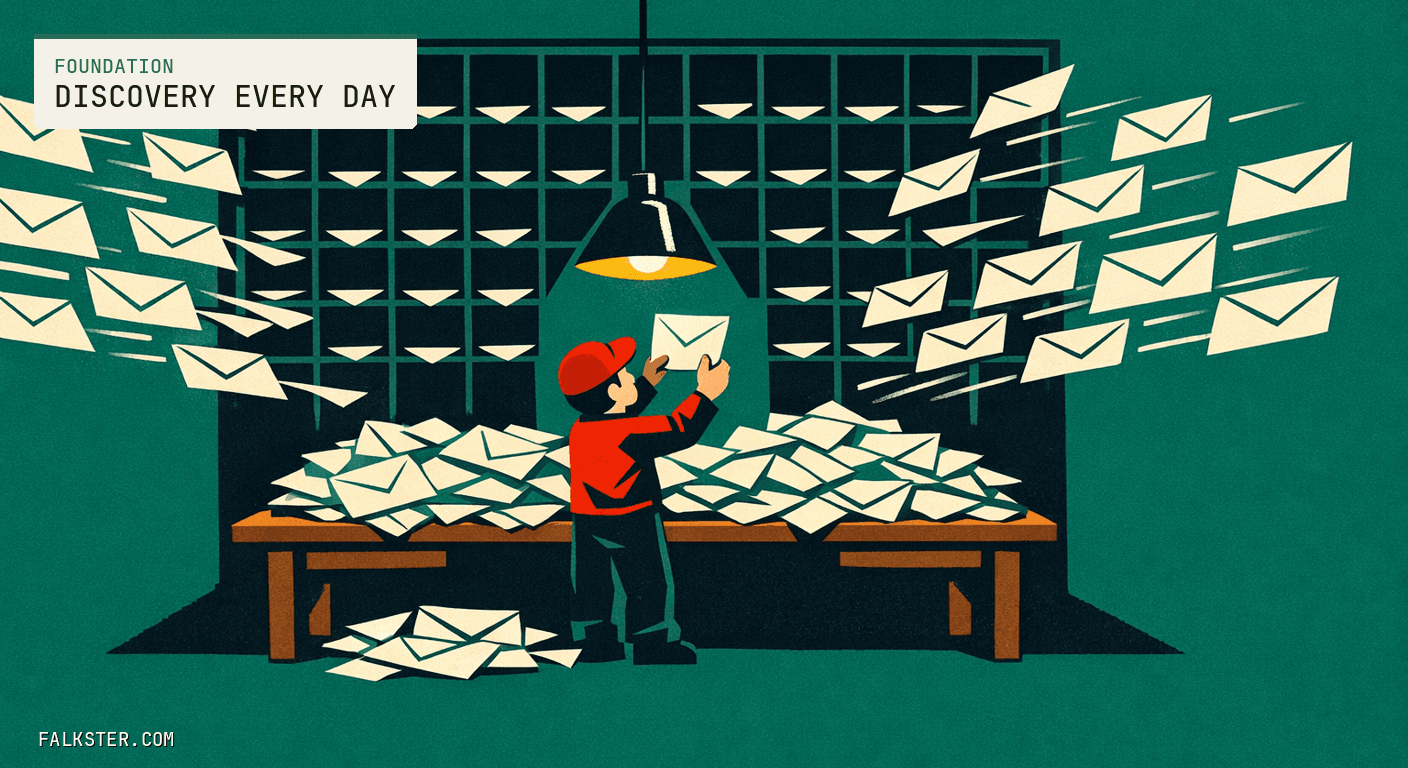
Something changed in how product teams hear from customers. A customer conversation used to be a meeting somebody had to book. Now software can ask every customer who walks away, and the answers come back the same week.
That changes the product manager's job. If the asking runs by itself, the work that's left is choosing the question and acting on the answers.
Here's the clearest example I read this week. Aakash Gupta, who writes the Product Growth newsletter, published a walkthrough with Greg Greiner on November 13. Greiner runs Woven, a company whose product has AI write to customers. Before that he was chief product officer at Bolt.
Gupta writes that at Bolt, Greiner was happy if he talked to seven or eight customers in a month. Today his AI talks to every one.
Then comes the example. Ancestry, the genetic-testing company, had shoppers who started buying a kit and then left. As Gupta tells it, Ancestry worked with Woven to have AI reach out to them. 3,470 wrote back.
This is part 4 of The PM Transition. Part 3 said the PM's spec is now a set of tests that run on every build. This part is about where those tests come from.
The short version
- Software can now ask every customer who leaves why they left. Ancestry, the genetic-testing company, tried it with shoppers who dropped out of buying a kit.
- 3,470 of them wrote back, as Aakash Gupta reports it from Greg Greiner, whose company Woven did the work. So the product manager no longer has to be the one asking.
- The job is to pick the question, read the answers, and turn them into a fix or a test the same week.
- Some learning still needs a person in the room, and I'd save that time for the big decisions. One more thing matters.
- The AI that writes to customers speaks for the whole company, and the answers touch price, design, and the product itself. So one team should own it, under the chief product officer (CPO).
Software can ask everyone who leaves
Gupta lists six moments when it makes sense to write to a customer. They didn't finish signing up. They're in a trial. The trial ended and they didn't buy. They looked at an upgrade and passed. Their usage dropped. They canceled.
Every one of those is a moment when a person just made a call about your product. They know why. Most of the time nobody asks.
The cost of asking has dropped to almost nothing. Gupta writes that Greiner built a working version in about 30 to 40 minutes with Claude Code, Anthropic's coding tool. It needed a list of email addresses, a file of instructions, the company's policies, and a way to send mail.
Greiner told Gupta that 20 to 40% of people respond. That's a range he mentioned, and nobody measured it for the article. Even the low end is a lot of answers when you ask everyone.
Compare that with seven or eight conversations a month. A PM who does the asking by hand is working from a tiny sample, and it's mostly the customers who agreed to a call. The people who left are the ones you most need to hear from, and now you can.
The reading is the product work
Here's what Ancestry's shoppers said, as Gupta lists it. About 42% raised privacy and what a genetic test might turn up. About 39% were weighing a gift against buying for themselves. About 31% worried about the subscription and hidden fees.
The page doesn't say what those shares are measured against. They add up to more than 100, so I read them as shares of the replies, with some people raising more than one thing.
Then there's the part I'd show every PM. Of the shoppers who asked about shipping time, 41% went on to buy. Of the ones waiting for a sale, 28% did. Of the ones confused by the subscription, 20% did. Gupta notes the AI answered the shipping questions, and those shoppers bought.
Read that the way a product person would. This next part is my read, not Gupta's. If people buy once they know when the kit arrives, the delivery date belongs on the page before anyone has to ask. That's a product fix. The subscription confusion is a pricing story problem, the kind I covered in pricing is a product decision. The privacy worry is a design problem about trust.
So one question turned up three themes, and each one needs a different fix. None of the fixes is "run more interviews." And you won't find them on a dashboard. Somebody has to read the replies and know which ones point at the product.
Rohan Varma shows what this looks like inside a company. Varma was the first PM at Cursor, the coding tool, and then led product for Codex, OpenAI's coding agent. In Paweł Huryn's Product Compass guide from November 17, he describes how he kept up with customers at OpenAI.
Customers and the team posted feedback in Slack channels. Varma had Codex read those channels and sum them up. The summary landed on a board in Linear, the team's task tracker, and a daily run sent him a note. He says he had five or six runs like that.
By his account, the Codex team had about two PMs for 30 to 40 engineers. Nobody covers that much ground with a calendar full of calls. You cover it by making the listening run every day, and you spend your own hours on the reading.
So the PM's new artifact is a question list. One question per moment. Greiner's advice, as Gupta relays it, is to ask one thing and let the customer lead. And when a theme shows up again and again, it becomes a row in the test file from part 3.
What still needs a person
I don't want to oversell this. An email to people who left is a narrow tool.
Tony Alicea wrote the best frame for it on November 13, in an article for Nielsen Norman Group, the usability research firm. He splits research into three jobs. One checks whether a change did what you predicted. One finds out why people behaved the way they did. The last is open-ended discovery, which turns up needs nobody thought to ask about.
Tracking built into the product handles the first job. Alicea is blunt that it "cannot replace independent discovery." I wrote about his template last week in three lines for the research section.
The AI email does the second job well. It asks why, at the moment it matters. But it only hears from the people who answer, and only about the thing it asked. It won't find the need you didn't know to ask about.
So I'd split a PM's listening in two. The daily signal runs by itself and covers everyone. Live conversations go to the decisions that are hard to undo. Alicea names pricing as one of those. I argued in May that AI products need bursts of deep discovery, and that still holds. The signal tells you where to point the burst.
There's also a safety step, and it's a product decision too. Gupta suggests a second model that checks every draft against the company's policies before it goes out. Drafts that fail go to a person. Email gives you time for that check, since nobody expects an answer within seconds.
One question list, one owner
This is where the org chart starts to matter.
The AI that writes to a customer speaks for the whole company. I argued on Saturday, in the latest CPO part, that the product team should ship every agent that speaks for the company. This one belongs on the agent roster with the rest.
It's easy to picture how this goes wrong. Marketing's email tool writes to the shopper who left. Support sends a survey. Product sends its own question. The customer gets three messages in a week, and each team learns a third of the story.
The answers don't respect team lines either. Ancestry's replies touched price, trust, and shipping in one batch. Product marketing needs the subscription theme. Design needs the privacy theme, and it shows up in the repair count later if nobody acts. The field team hears the same themes at big customers and hands them back.
So I'd keep one question list and one stream of replies for each product area. The Product Builder owns the list and reads the stream. The other seats add questions and get their themes the same day. And the CPO makes sure there's only one list. The replies are the earliest read on the one number the whole function answers for, whether customers use what shipped.
That's the PM's piece of the case The Product OS makes as a whole, and the one The CPO Transition argues from the top. One loop starts with one way of listening.
The decision for this quarter is small and concrete. Who owns the list of questions your company asks customers automatically? And where do the replies go? If the answer is three teams and three inboxes, fix that first.
What I expect
These are my predictions, not facts.
By the end of 2027, at AI-native software companies, most customer conversations a product team learns from in a given week will have been started by an agent. People will still do the deep ones.
By 2028, product reviews open with what customers said that week and which test rows came out of it. The days from a customer's reply to a change in the product will be a number teams track. And PMs will spend their live interview hours on the few decisions that are hard to undo.
One thing to try this week
Pick one moment. I'd start with a trial that ended without a purchase.
Write one question for it. Keep it short and open, something like "What were you hoping to do that you couldn't?" Send it to the last 50 people who hit that moment. Let an AI draft the notes if you like, but read every draft before it goes.
Then read every reply yourself. Don't summarize them yet. Tally the themes by hand, and pick the one a product change could answer before the customer has to ask.
Ship that one fix. Then add the question to a list, put your name on it, and ask who else in the company is already writing to those same people.
Sources: Aakash Gupta with Greg Greiner, "How to Build an AI Customer Research Agent in Claude Code," Product Growth, November 13, 2026, for the Ancestry figures, the six moments, the build time, and the response range as Gupta reports them. Paweł Huryn and Rohan Varma, "How to Become an AI PM in 2027: The Complete Guide From Cursor's First PM," The Product Compass, November 17, 2026, free portion, for Varma's account of his feedback runs and the Codex team. Tony Alicea, "Research-In-The-Loop: How UXR Adapts to Development at AI Speed," Nielsen Norman Group, November 13, 2026.
Part of the running argument on AI Product Management: the parts of the job we trained people for got cheap. What's left is choosing what to ask, reading what comes back, and writing it down as a test, inside one loop under the CPO.
Related answer: What do Ancestry's 3,470 replies to an AI mean for product managers?
3,470
Frequently asked
What does it mean that discovery is a daily signal?+
It means learning from customers stops being a project you schedule. Software can write to every customer at the moment they leave, and the replies arrive every day. The product manager no longer has to be the one asking. The job is to pick the question, read the answers, and turn them into a fix or a test the same week.
What happened in the Ancestry example?+
As Aakash Gupta reports it on November 13, 2026, from Greg Greiner of Woven: Ancestry had shoppers who started buying a test kit and then left. Ancestry worked with Woven to have AI reach out to them, and 3,470 replied. The page doesn't say how many messages went out or over what period.
What did the replies show?+
Three themes led, as Gupta lists them. About 42% raised privacy and what a genetic test might turn up. About 39% were weighing a gift against buying for themselves. About 31% worried about the subscription and hidden fees. And 41% of the shoppers who asked about shipping time went on to buy, against 20% of those confused by the subscription.
Does this replace customer interviews?+
No. Tony Alicea of Nielsen Norman Group separates checking a change, finding out why people behaved a certain way, and open-ended discovery of needs nobody predicted. He writes that tracking cannot replace that third kind. An AI email only hears from the people who answer, and only about what it asked. I'd keep live conversations for the decisions that are hard to undo.
Why should one team own the questions and the replies?+
Because the AI that writes to a customer speaks for the whole company, and the answers touch price, design, and the product at once. If marketing, support, and product each write to the same person, the customer gets three messages and the company gets three partial pictures. One question list and one stream of replies belong in one function, under the chief product officer.
What are Falk's predictions in part 4?+
Two, labeled as predictions. By the end of 2027, at AI-native software companies, most customer conversations a product team learns from in a given week will have been started by an agent. And by 2028, product reviews open with what customers said that week, and the days from a customer's reply to a change in the product is a number teams track.
Sign in with LinkedIn to leave a comment.
Sign in with LinkedIn