
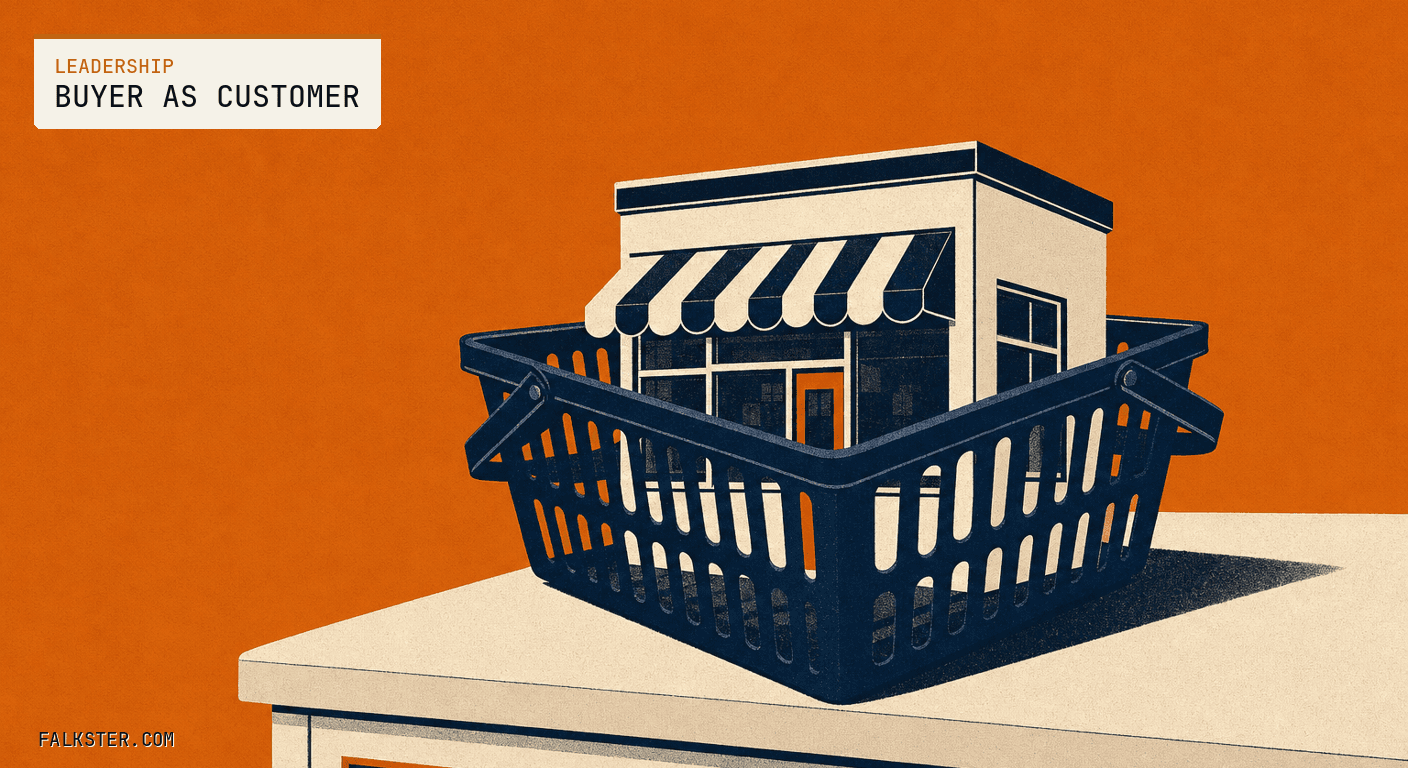
Big companies are buying small AI companies at prices that look hard to explain. Often there is no revenue number to point to. If you build AI products, it helps to know what the buyer is paying for.
This is a Ship Story about one deal from last week. I read it next to a deal of my own.
The short version
- Palo Alto Networks sells security software to large companies. Last week it agreed to buy Applied Compute, a young AI company, for $4.5 billion in stock.
- The announcement gave no revenue figure for Applied Compute, as Jason Lemkin of SaaStr reports. The founder will become the buyer's co-chief AI officer. The buyer first met the company as a possible customer. I sold a company to Microsoft years ago.
- Microsoft bought what our product proved we could do, and later shut the product down.
- A buyer like that pays for a skill, a team, a block against a rival, or time. Revenue is a sanity check.
- So treat every big customer trial as a test of your team too.
What happened
Jason Lemkin runs SaaStr, a community for software founders. He wrote up Palo Alto Networks' quarter on November 21, 2026. I read his post in full. I didn't open Palo Alto's own release, so the figures here are as he gives them.
The quarter was strong. Revenue was $3.44 billion, up 39% from a year earlier. Lemkin notes that most of that growth was bought. Palo Alto closed a deal of about $25 billion for CyberArk, an identity security company, in February. By his subtraction, growth is about 18% once that deal is in both years.
Then came the new deal. Palo Alto will buy Applied Compute in an all-stock deal valued at $4.5 billion.
$4.5 billion
Applied Compute works on open-weight AI models. Those are models whose trained settings are published, so anyone can run them. The company tunes those models after training and runs them for customers.
Lemkin reports three details that matter here.
- No revenue figure. The release gave no revenue or customer numbers for Applied Compute.
- The founder's new job. Yash Patil, the co-founder and chief executive, will become Palo Alto's Co-Chief AI Officer. His research team will help train Palo Alto's own models.
- How they met. Nikesh Arora, Palo Alto's chief executive, said they first saw the platform as a prospective customer. Then they decided to buy the company.
Arora's stated reason is about security. In his view, every large company will run a mix of open and closed models, and each one needs protecting.
What the buyer is paying for
I've been on the selling side of a deal like this. I sold a company to Microsoft.
People assume Microsoft wanted my product. It didn't, much. It wanted what the product proved we could do. And it wanted the people who could do it again. I wrote that up in What Acquirers Actually Buy in a Startup Acquisition.
My claim there is that a strategic buyer pays for one of four things.
- A skill it can't build fast enough.
- A team it wants to keep together.
- A block, so a rival can't have you.
- Time, in a market where being early decides the winner.
Revenue isn't on the list. For this kind of buyer, revenue is a sanity check that the market is real.
Now read the Applied Compute deal against that list. The release leaves out revenue. The founder gets a top AI title at the buyer. The research team is pointed at the buyer's own models. That reads to me as a skill and a team. That's my reading, and neither company describes it that way.
One caution. A missing revenue number doesn't mean there is no revenue. It means the buyer didn't need it to explain the price.
What it costs the buyer
Buying this way has a cost, and it shows in reported profit. Lemkin gives Palo Alto's operating profit two ways. Look at the gap between the first two rows.
| Operating profit for the quarter | Amount |
|---|---|
| Adjusted | $1,059 million |
| Under standard accounting rules | $96 million |
| Under standard rules, a year earlier | $309 million |
The gap is close to $1 billion in one quarter. Lemkin puts it down to three things. One is pay in stock. One is the write-down of things the company bought, spread over years. One is the cost of doing the deals.
His point for founders is worth keeping. This is how a buyer sees your price. It sits on their books as a charge for years.
Paying in stock is what makes a bet like this possible. Lemkin notes that Palo Alto is worth more than $250 billion. A company that size can spend $4.5 billion without touching its cash.
The trial is two tests
Lemkin draws one lesson I'd underline. If you build AI tools for other companies, your likely buyer may first show up as a customer running a trial.
Here is what I'd add from my own sale. In a trial, the customer learns more than whether the product works. They see how fast your team fixes things. They see who answers the hard questions. They see what you say no to. That is the proof of a skill and a team.
So I'd treat every large trial as two tests. One is of the product. One is of the people. Put the people you'd want a buyer to meet on it.
There is a second test, and it comes later. After Microsoft bought my company, it shut the product down. I think that was right, and I explain why in What Happens After Acquisition: My Product Was Killed. The question to ask is simple. Did the skill reach more customers after the deal, or fewer? For Applied Compute it's too early to say.
This week
Write one line. Which of the four things would a buyer pay you for: a skill, a team, a block, or time? Then check that your biggest trial shows it. This sits in Building a Company in Public because it changes what you build toward.
Related answer: Why do buyers pay billions for AI startups with no stated revenue?
Sources: Jason Lemkin, "5 Interesting Learnings from Palo Alto Networks at $14.5 Billion in Revenue," SaaStr, November 21, 2026, read in full. Every figure about Palo Alto Networks and Applied Compute is as he reports it. I did not open the company's release. The article embeds a post by another writer with a run rate for Applied Compute. It was cut off in my copy, so I left it out. The four things a buyer pays for and the Microsoft story are from my own earlier posts.
Frequently asked
What is Palo Alto Networks buying?+
Applied Compute, a young company that tunes and runs AI models whose inner settings are published for anyone to use. Jason Lemkin of SaaStr reports an all-stock deal valued at $4.5 billion.
Did the announcement give Applied Compute's revenue?+
No. As Lemkin reports it, the release gave no revenue or customer figures. That does not mean there is none. It means the buyer did not need the number to explain the price.
How did the buyer find the company?+
Lemkin reports that Nikesh Arora, Palo Alto's chief executive, said they first saw the platform as a prospective customer and then decided to buy the company.
What does a strategic buyer pay for?+
One of four things, from my own experience selling a company to Microsoft: a skill it cannot build fast enough, a team it wants intact, a block against a rival, or time. Revenue is a sanity check.
What does a deal like this cost the buyer?+
It shows in reported profit. Palo Alto's adjusted operating profit for the quarter was $1,059 million. Under standard accounting rules it was $96 million. Lemkin puts the gap down to stock pay, the write-down of acquired assets, and deal costs.
What should a founder do with this?+
Treat every large customer trial as two tests, one of the product and one of the team. And write down which of the four things a buyer would pay you for.
Sign in with LinkedIn to leave a comment.
Sign in with LinkedIn